Hi! Need help planning your dream trip? 🌍
Pick the option that fits you best so we can route you to the right help.
Overview
Trip Map
Itinerary
Inclusions
Reviews


Must see sights


Starting from
per person
Enter your details to embark on a journey that can be tailored just for you.
Start
Travelers
Preferred Hotel Stars
Select your interests and destinations for a trip plan inspired by you.
Click To Make Map Interactive
Arrival
1 nights
Zagreb
Croatia
Train: 6.5h
4 nights
Split
Croatia
Ferry: 5h
2 nights
Dubrovnik
Croatia
Departure

Day 1
Arrive Zagreb
Day 1
Arrive Zagreb
To Be Determined
Zagreb has one main airport, Zagreb Franjo Tuđman Airport, or simply Zagreb Airport, where almost all visitors arrive. Taxis are available directly at the terminal exit, or you can arrange a private transfer for added convenience. Uber is also available for those with the app.

Day 1
Arrive Zagreb

Day 1
Arrive Zagreb
To Be Determined:
Transfer from Airport
Mid-Day:
Merchant's Old Town
Afternoon/Late Afternoon:
Lower Town

Day 2
Zagreb to Split
Day 2
Zagreb to Split
9:00 AM - 11:30 AM
On this 2.5-hour private tour, you will see the main sights and vibrant everyday life in Zagreb. You will visit the oldest parts of town, hear genuine Zagreb stories and legends, and enjoy a walk through the old town's green promenade. Highlights include Zagreb cathedral, the short funicular connecting the lower and uppers parts of the city, the oldest part of the city called Gradec were the city's parliament and best museums are to be found, the famous pedestrianized Tkalčićeva Street that has one of the most engaging and fun dining areas in Southern Europe and the open-air market of Dolac.

Enjoy an intriguing and bitter-sweet visit to a unique museum focused on heartbreak.
Show More
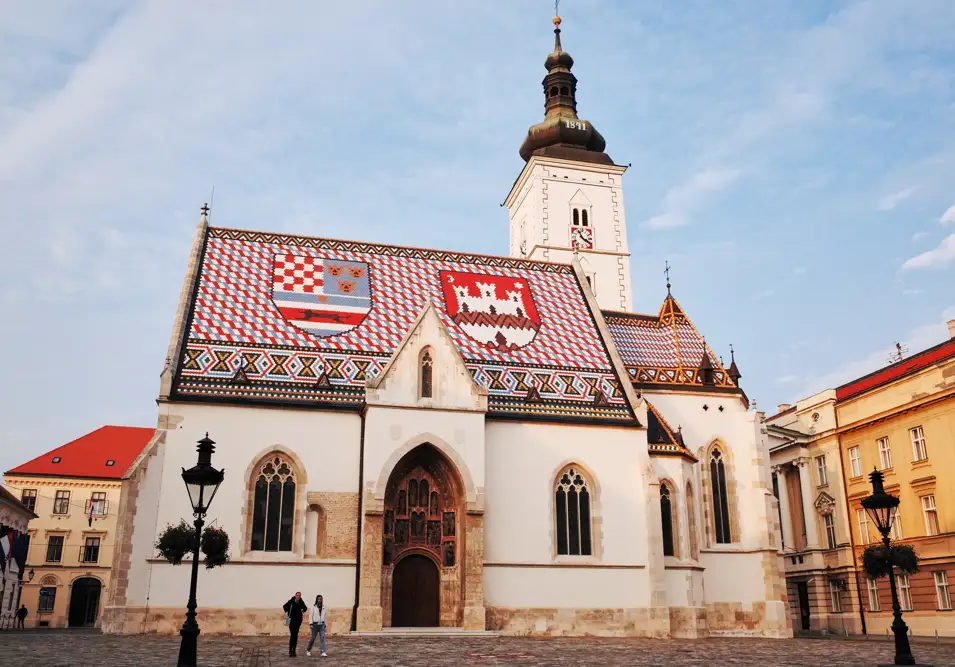
Be sure to stop by the picturesque square and church at the heart of Old Zagreb.
Show More
Historic lookout tower
Show More
Enjoy an intriguing and bitter-sweet visit to a unique museum focused on heartbreak.
Show More
Be sure to stop by the picturesque square and church at the heart of Old Zagreb.
Show More
Historic lookout tower
Show More
Enjoy an intriguing and bitter-sweet visit to a unique museum focused on heartbreak.
Show More
Day 2
Zagreb to Split

Day 3
Split
Day 3
Split
9:00 AM - 11:00 AM
This two-hour guided tour will take you to the Roman emperor Diocletian's 1700-year-old palace which was built as his personal rest home. Walk from the Bronze Gate through the central hall of the ancient cellars is the main communication line between the busy waterfront promenade, the Riva, and the palace's main forecourt, the Peristyle. You'll also stop by the Cathedral of St Duje, one of the most beautiful cultural attractions on the Adriatic coast, the Roman temple of Jupiter (latterly a Christian baptistry), the fabulous Golden Gate, and the medieval Croatian bishop who introduced the Croatian language in religious services.

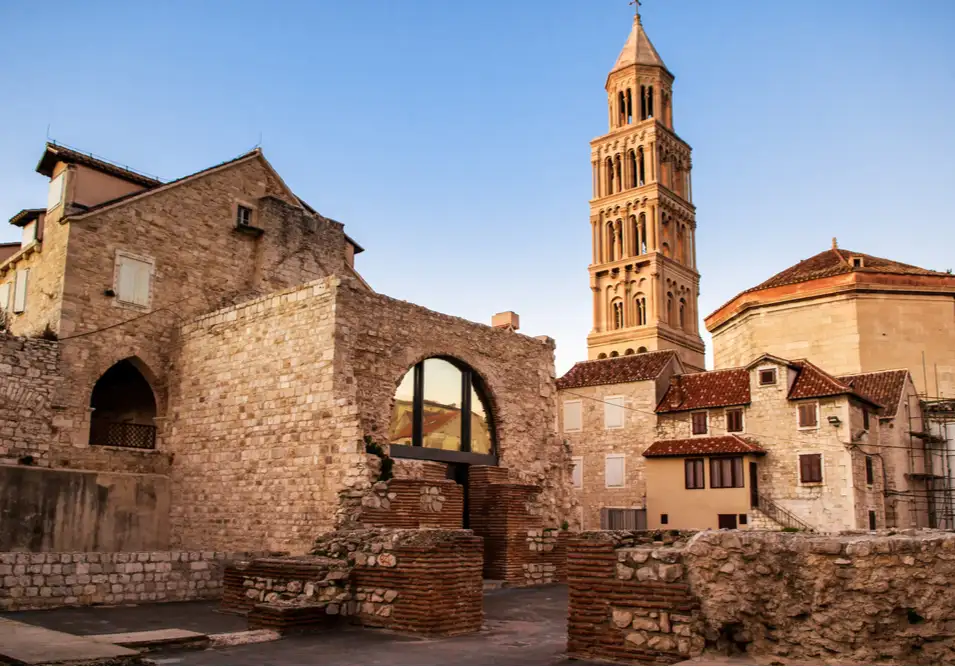
See the beautiful courtyard which was once the center of the palace, and is now the heart of Split.
Show More
Enter this ancient gateway to discover palace cellars used as film sets for Game of Thrones.
Show More
See the beautiful courtyard which was once the center of the palace, and is now the heart of Split.
Show More
Enter this ancient gateway to discover palace cellars used as film sets for Game of Thrones.
Show More
See the beautiful courtyard which was once the center of the palace, and is now the heart of Split.
Show More
Enter this ancient gateway to discover palace cellars used as film sets for Game of Thrones.
Show More
Day 3
Split

Day 4
Split
Day 4
Split
Early Morning to Afternoon
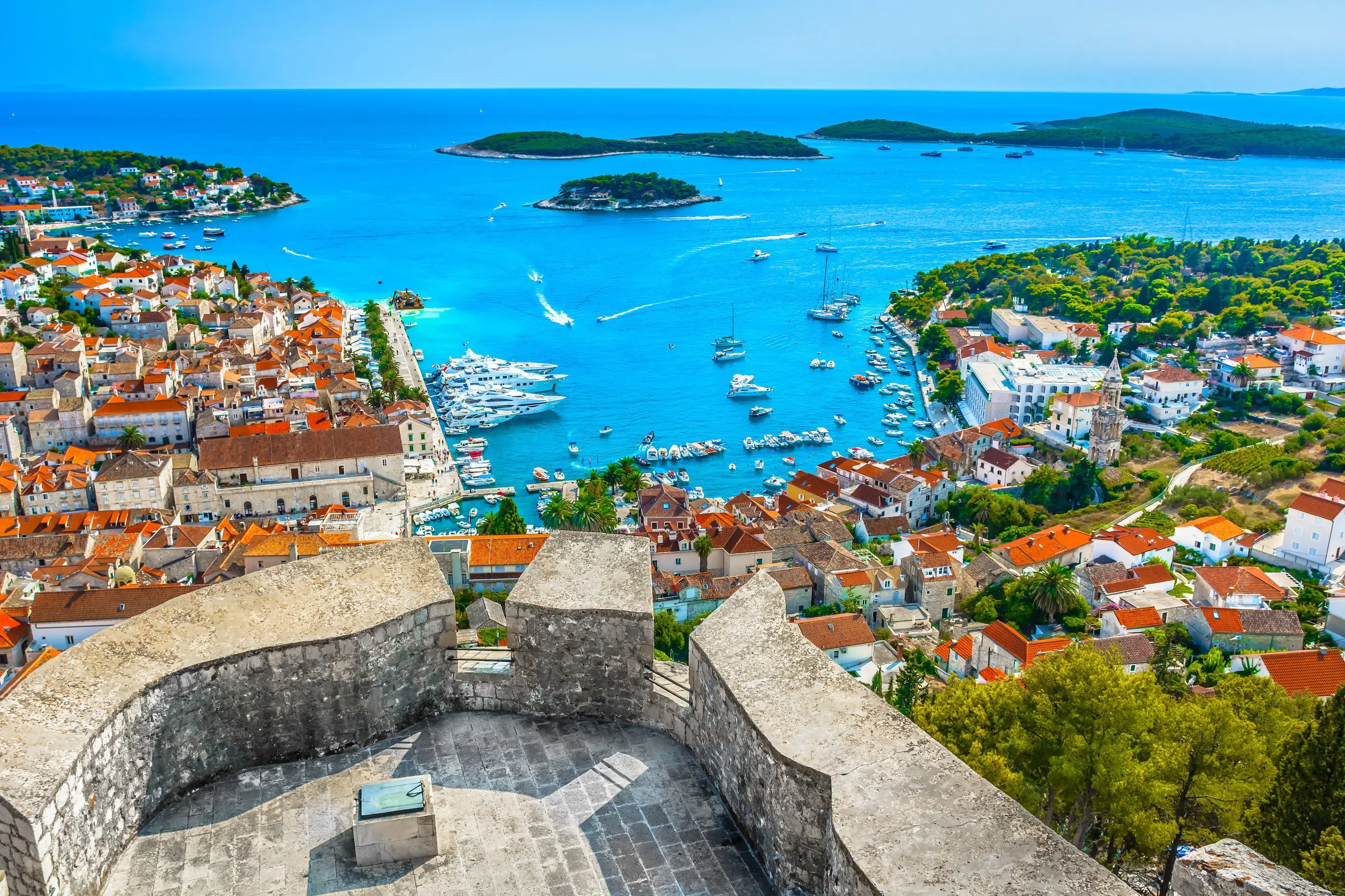
Hvar has a reputation as the Croatian Ibiza, i.e. lots of young people partying as if their lives depended on it, but it's actually much more than that and remains relatively unspoiled and comparatively affordable in relation to the mainland coast. Both of its main towns, Hvar and Star Grad, are lovely medieval towns full of traffic-free alleys surrounded by ancient stone houses; these act as a romantic backdrop to the towns' many cafes from where you can indulge in people-watching and view the fancy yachts filling up the harbor. In the summer, you can take a passenger-only 1-hour catamaran trip directly to Hvar Town. In other months, Hvar is still relatively easy to get to via a 2-hour car ferry to the main island port of Stari Grad. If you do take the ferry, it's still just a short bus or taxi ride to Hvar or Stari Grad - you can even walk to Stari Grad from the ferry port. Keep in mind though that you must be quick off the ferry to catch the bus. If you can afford it, taking a private boat is the ultimate way to experience Hvar, as you can swim, snorkel, and sunbathe along the way. Also keep in mind that while Hvar is happening in the warmer months, it is quite sleepy in the off season. Many restaurants and attractions will be closed, but if you enjoy exploring in peace and quiet, it is the perfect time to visit.

Stroll the atmospheric narrow streets of this small town nestled at the end of a clear blue bay.
Show More
Hop over to these rocky islands to swim and snorkel in their picturesque little coves and lagoons.
Show More
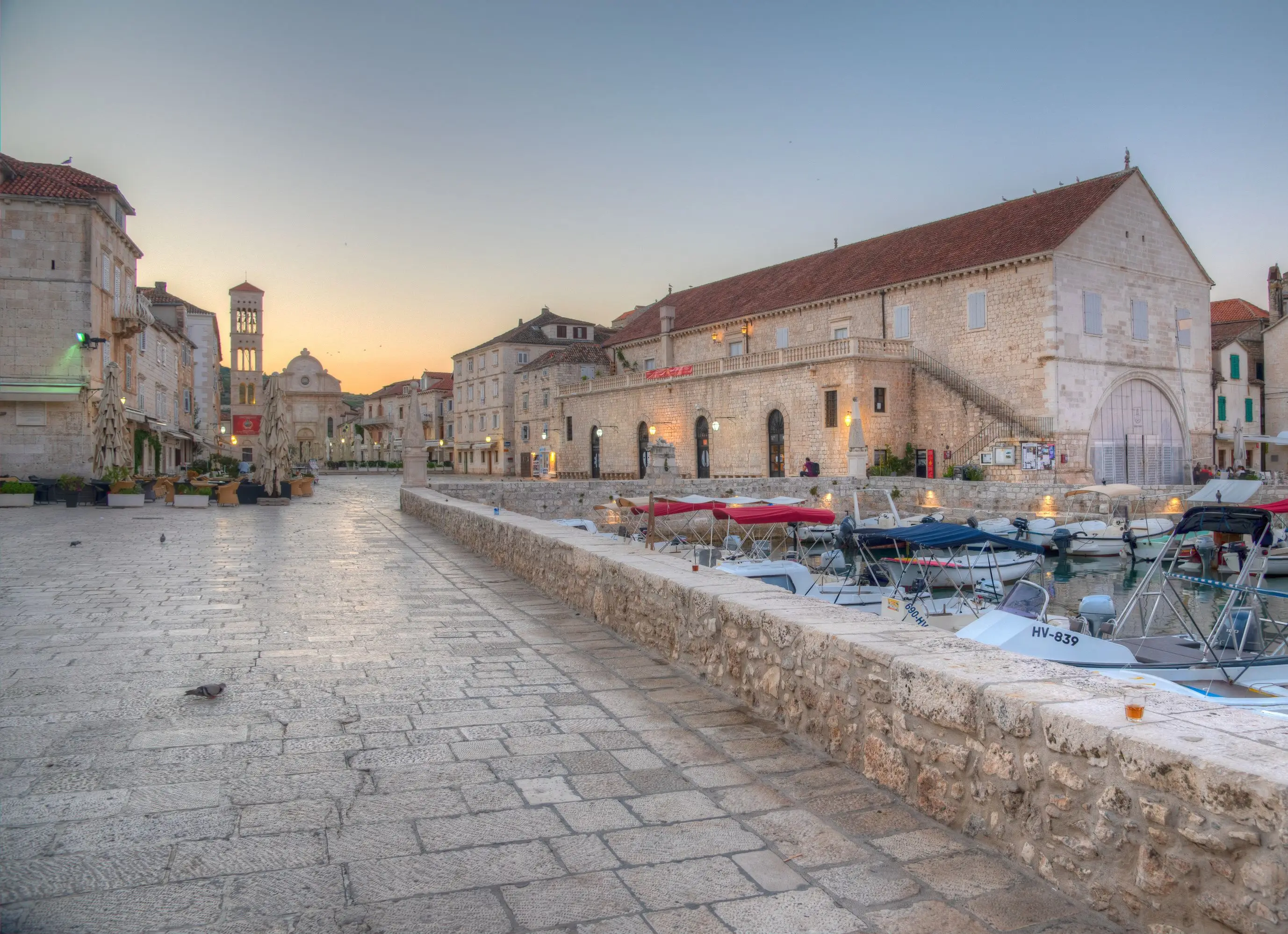
Check out where war galleys were once repaired on Hvar's main square.
Show More
Climb to this stone fortress above the town of Hvar for the perfect photo.
Show More
Stroll the atmospheric narrow streets of this small town nestled at the end of a clear blue bay.
Show More
Hop over to these rocky islands to swim and snorkel in their picturesque little coves and lagoons.
Show More
Check out where war galleys were once repaired on Hvar's main square.
Show More
Climb to this stone fortress above the town of Hvar for the perfect photo.
Show More
Day 4
Split

Day 5
Split
Day 5
Split
Early Morning to Mid-Day
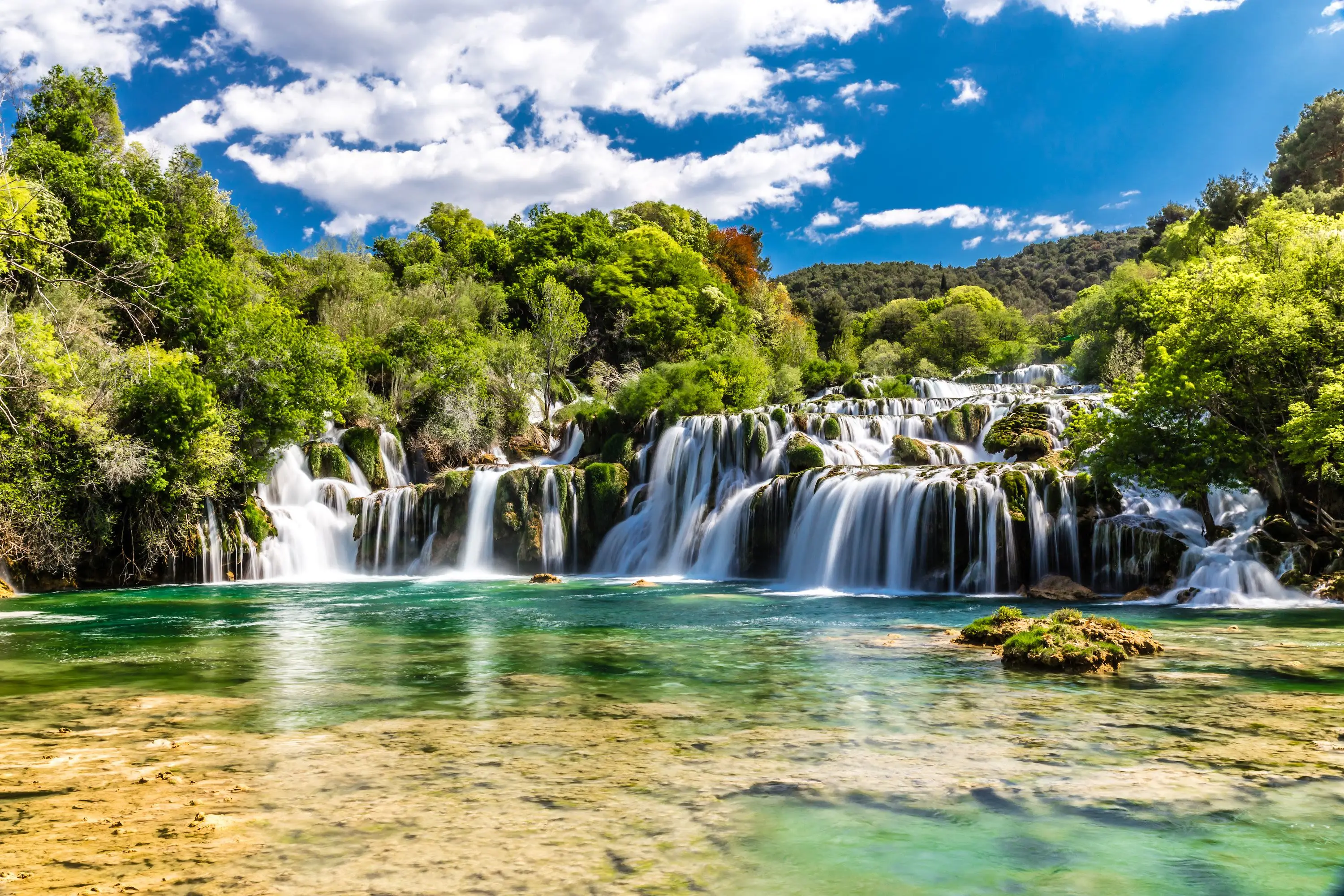
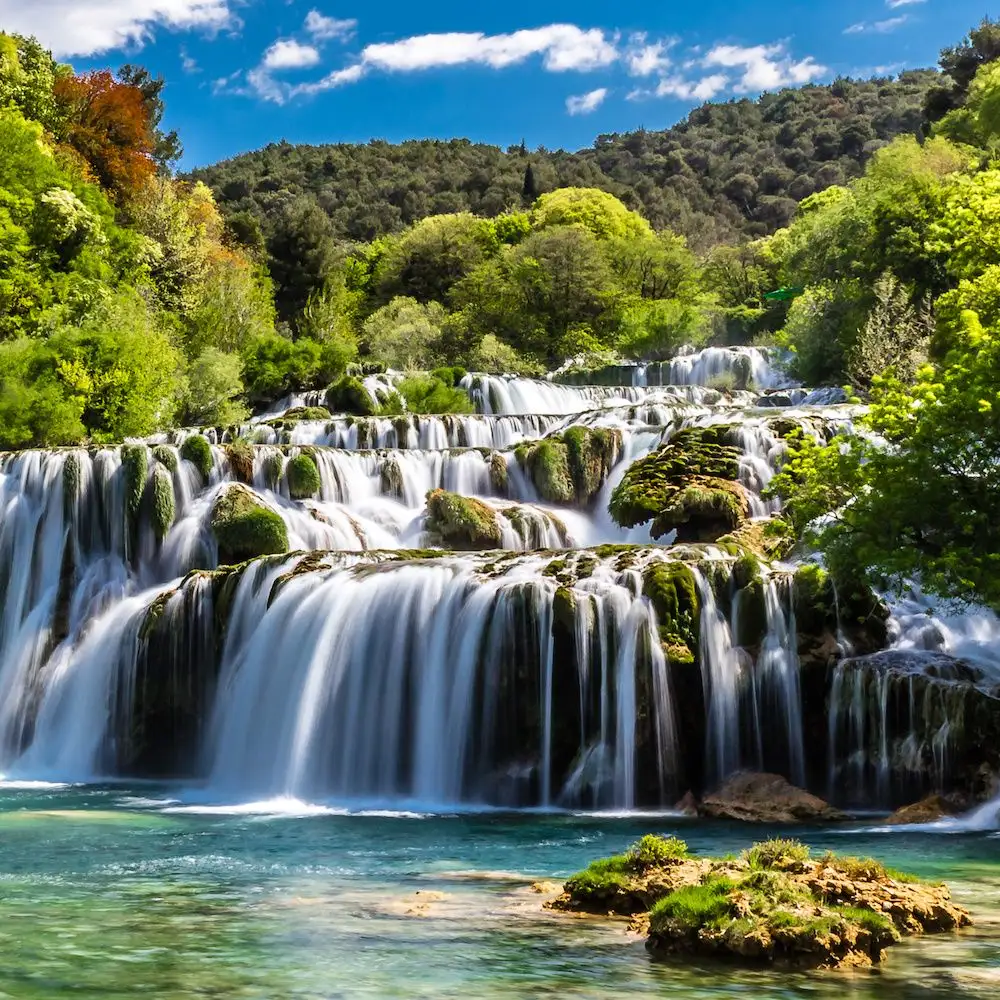
While the more famous Plitvice Waterfalls are much larger and get all the press, the Krka waterfalls also pour crystal clear blue water over karst rock formations. And just like Plitvice, they are so beautiful that a National Park was created to protect them. But they also have a couple of key advantages over Plitvice. First of all they are much closer to Split, meaning it is much more manageable to visit them as a day trip. In fact Krka is only an hour from Split, versus a three hour drive to reach Plitvice. Keep in mind though that the waterfalls can only accommodate a limited number of people and the park limits entry. So if you want to be assured of getting in, either get there very early, or book ahead with an organized group. One more thing to remember is that it is not just about swimming - the National Park is also a great place for a hike. Also, don't forget your watershoes if you plan to swim, but please note that you are no longer allowed to swim beneath the main cascading falls.

Day 5
Split

Day 6
Split to Dubrovnik
Day 6
Split to Dubrovnik
6:45 AM
First keep in mind that the ferry terminal is located only about a 1/2-mile (800m) from the Split Old Town. Also consider that if staying in the pedestrian area of Old Town, a car cannot pick you up directly from the hotel, meaning you will have to walk a short distance with your bags anyway. If this is an issue, be sure to arrange assistance with a private transfer service or with your hotel beforehand. UberX is available in Split if you prefer to take a car. If staying in a hotel, they can also arrange a taxi pick up for you. The price should be about 10-15 EUR depending on your hotel location. For the most convenience, you can arrange a private transfer to the ferry terminal. Make sure the taxi knows which terminal you are going to: the Krilo (Kapetan Luka) catamaran terminal is opposite the bus station and the car ferry terminal is a bit further to the left. The Jadrolinija catamaran terminal is at the top of the dock area nearest the old town. If taking the Krilo catamaran, the taxi driver should drop you off beside the concrete pier where the catamarans leave from or next to the bus station on the opposite side of the street. You should see one or two catamarans waiting at the end of the pier when you arrive. If you're going to the islands in the off-season, then you'll probably need to go to the car ferry terminal further down the waterfront.

Day 6
Split to Dubrovnik

Day 7
Dubrovnik
Day 7
Dubrovnik
9:00 AM - 11:00 AM
'Winter is coming' is not a phrase commonly heard in Dubrovnik unless it's on the set of the phenomenally popular television series, Game of Thrones, so take the opportunity to visit several of the locations from the show any time of the year. As soon as you approach the old city you'll immediately begin to recognize some of the sets from various episodes.

Day 7
Dubrovnik

Day 8
Depart Dubrovnik
Day 8
Depart Dubrovnik
To Be Determined
Dubrovnik has one main airport, Dubrovnik Airport, also referred to as Čilipi Airport. The most affordable way to reach Dubrovnik airport is by public bus (2 EUR), however, this will take quite a lot of time. You can still save quite a bit of money in comparison to a taxi by taking the direct Atlas Shuttle bus (6 EUR). The buses pick up near the western entrance to Dubrovnik, Pile Gate, and departs roughly every 30 minutes during the day. Your hotel can arrange a reliable taxi which will cost roughly 35-50 EUR. UberX is also available, or you can also arrange a private transfer for added convenience. If you are picked up about 2 hours and 45 minutes before your departure time, you should arrive at the airport with over two hours to spare, depending on traffic. Keep in mind that if staying in Old Town, the taxi cannot pick you up directly from the hotel, meaning you will have to walk to the Pile Gate with your bags. If this is an issue, be sure to arrange assistance with a private transfer service or with your hotel beforehand.

Day 8
Depart Dubrovnik
Pre-Paid Tours and Activities:
Pre-Paid Transportation:
Accommodation:
Go Real Travel Mobile App:

7 Days

4 Days

5 Days

4 Days

14 Days

10 Days

10 Days
Croatia & Slovenia: 10 Days of Historic Coastline, Waterfalls & Mountains
Croatia, Slovenia

10 Days
From the Adriatic to Europe's Heart: Exploring Croatia, Budapest, and Prague
Croatia, Hungary, Czech Republic

7 Days
Captivating Croatia & Slovenia: A Week of Coastal Charms and Alpine Wonders
Croatia, Slovenia

7 Days

4 Days

5 Days

4 Days

14 Days

10 Days

10 Days
Croatia & Slovenia: 10 Days of Historic Coastline, Waterfalls & Mountains
Croatia, Slovenia

10 Days
From the Adriatic to Europe's Heart: Exploring Croatia, Budapest, and Prague
Croatia, Hungary, Czech Republic

7 Days
Captivating Croatia & Slovenia: A Week of Coastal Charms and Alpine Wonders
Croatia, Slovenia


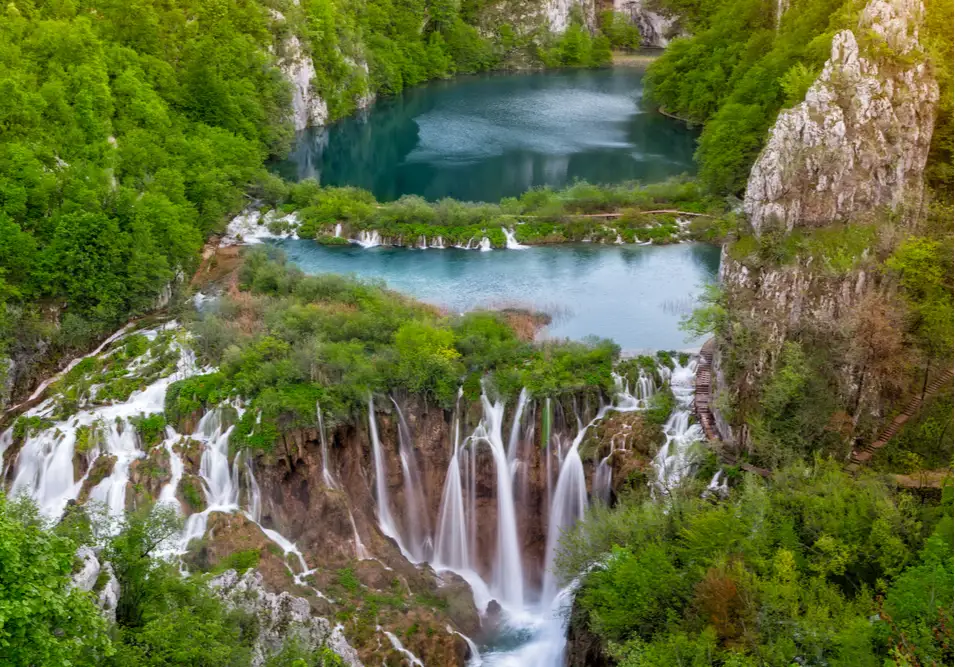
Plitvice Lakes in Croatia is a national park featuring 16 interconnected lakes. It was once one of Yugoslavia’s most popular tourist hotspots, and today this UNESCO World Heritage Site attracts visitors from all over the world. The lakes’ main draw is their sublime natural beauty. Turquoise pools, joined by a series of waterfalls and cascades, are set like jewels within the park’s lush green hillsides. Wooden hiking paths snake between the lakes and along the shores. Plitvice hosts an impressive variety of wildlife, from wild boars and dormice to hundreds of butterfly species, and countless types of birds. The park’s most famous resident is the elusive brown bear. Occupied by hostile forces during the Croatian War of Independence, this park’s history isn’t all paradisical. However, it’s easy to forget that troubled past when spending time by the lakes today. Today, Plitvice’s mood is all about peace, relaxation, and appreciation of stunning natural beauty.

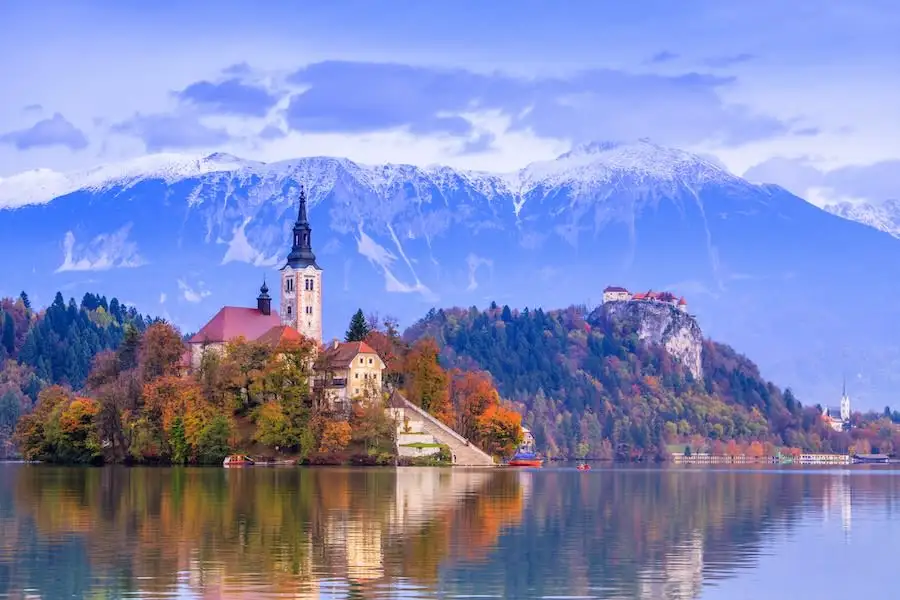
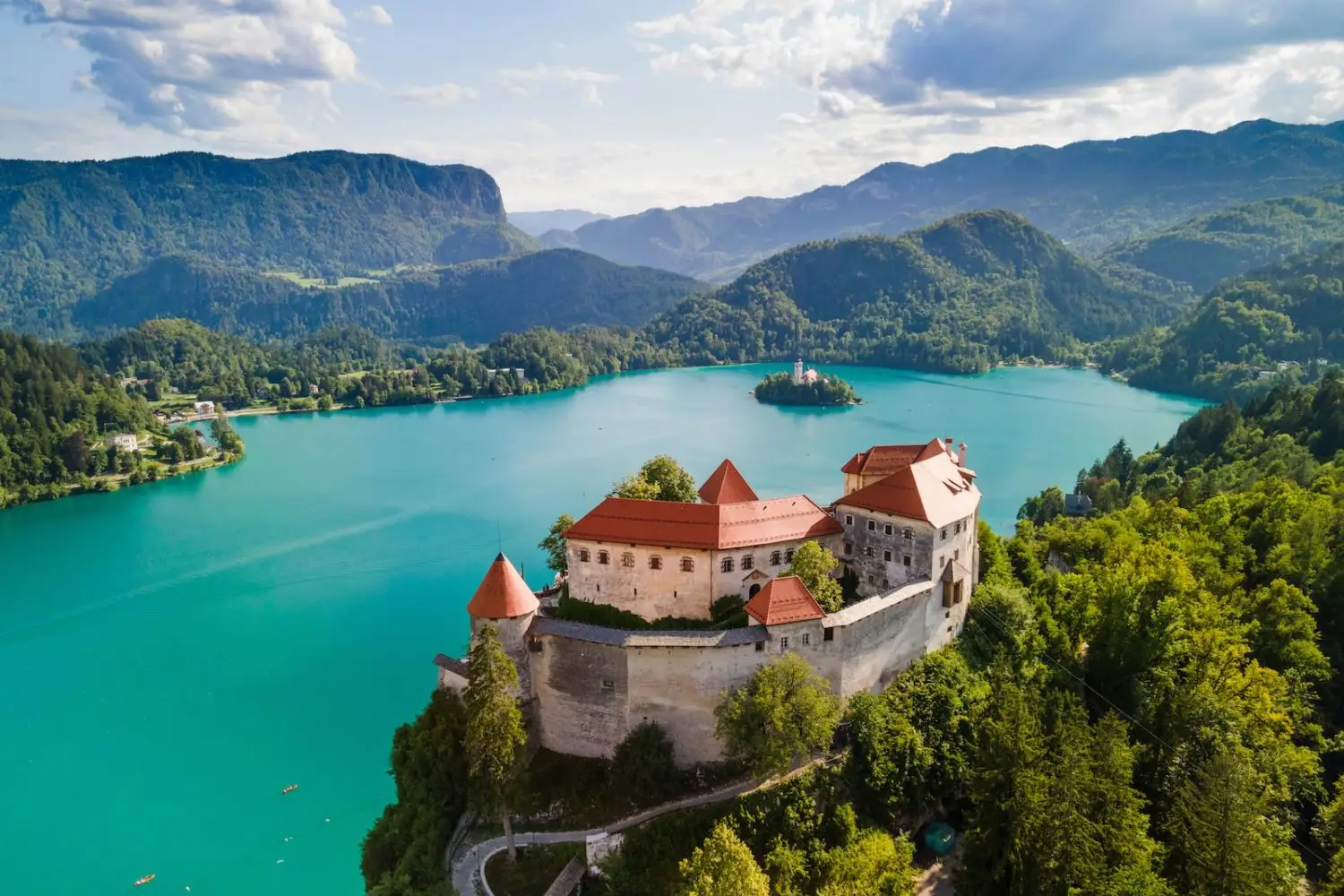
Lake Bled, cradled by the Julian Alps, feels almost improbably serene. At its edge, a small alpine town unfolds with gracious villas, lakeside paths, and cafés that look out toward the water, while a medieval castle rises dramatically from a cliff above. Just offshore, the tiny island crowned by its white church has anchored local legend and tradition for centuries. Life here moves at a gentler rhythm. You might glide across the lake in a traditional pletna boat, explore the castle’s terraces for sweeping views, wander forested trails, or simply linger over a slice of the famous kremšnita cream cake. As evening settles and the light fades over the mountains, Bled becomes noticeably quieter, taking on a calm and relaxed atmosphere.

Rovinj, set along the western coast of Croatia’s Istrian Peninsula, feels at once deeply Mediterranean and distinctly its own. The old town rises from a small peninsula in a tangle of narrow stone lanes, pastel façades, and worn stairways that lead gradually upward to the hilltop Church of St. Euphemia. Fishing boats still drift in the harbor below, while small cafés and galleries occupy buildings shaped by centuries of Venetian influence. Life here unfolds at an easy, unhurried pace. Locals gather along the waterfront promenade in the evening light, and the sea is never far from view—glimmering between houses or stretching wide beyond the rocky shoreline. Rovinj is less about grand monuments than atmosphere: the scent of salt in the air, the rhythm of waves against the harbor, and the quiet beauty of a town that has grown slowly and gracefully beside the Adriatic.

Zagreb is Croatia's biggest city, known for its cultural roots and vibrant street life. The city's rich history is evident in the mix of different architectural styles, including secessionist, classical, neo-Baroque, neo-Gothic, and art deco. Even the seemingly lackluster parts of town have been brought to life by street artists. At first glance, the red rooftops and cobblestone streets might seem reminiscent of other popular European cities, but you'll soon learn that Zagreb has a spirit all its own. Everywhere you go, you'll be rubbing elbows with lively locals hanging out at open cafes, gardens, and parks, or rushing to the next event on the calendar. Thanks to the spacious pedestrian zones attracting locals, expats, and visitors alike, socializing with new people and finding something unexpected to do is effortless. At night, the youth of the city becomes even more exuberant. With plenty of jazz clubs, beer halls, cocktail bars, and casinos, there's always something to do because the city never sleeps.

A lively port city situated between mountains and sea, Split is one of Croatia's most visited—and most beautiful— cities. With historical monuments sprinkled across the Dalmatian coastline and trendy cafes and shops popping up within the ancient walls of the city center, it's easy to see why this extraordinary city is such a popular travel destination. Split is always abuzz with visitors and locals alike enjoying a seafood meal outside, relaxing on the beach, or boating on the Adriatic. The weather is almost always beautiful, so the streets tend to be crowded with people looking to take advantage of the sunshine. A walk through Split feels like a journey through past centuries. The coastal town showcases modern architecture next to structures like Diocletian's Palace, which date back to the times of the Roman Empire. In fact, Split's Old Town resides within the walls of Diocletian's Palace. As you stroll through the narrow marble streets, you'll be amazed by the number of modern restaurants and bars populating this ancient area. It's easy to pack plenty of culture, history, activity, and leisure all into one amazing trip.

Situated in southern Croatia on the Adriatic Sea, Dubrovnik is famous for many different reasons. Everywhere you look in Dubrovnik is a stunning view. Known for its beautiful Old Town and ancient walls, Dubrovnik is a resilient city that deserves its nickname as the pearl of the Adriatic. Strolling through the limestone streets lined with baroque buildings, alongside the animated locals, will inspire you to keep exploring. The city walls offer spectacular views of the red rooftops in Old Town and the shimmering blues of the Adriatic Sea. After a tiring trek in the hot Croatian sun, cool off at one of Dubrovnik’s divine pebbly beaches and go swimming in the sea. The best way to end the day is a visit to Stradun, the main street, to pop into one of the cafes or restaurants, and relax during a delicious meal of Croatian specialties and wine.

Plitvice Lakes in Croatia is a national park featuring 16 interconnected lakes. It was once one of Yugoslavia’s most popular tourist hotspots, and today this UNESCO World Heritage Site attracts visitors from all over the world. The lakes’ main draw is their sublime natural beauty. Turquoise pools, joined by a series of waterfalls and cascades, are set like jewels within the park’s lush green hillsides. Wooden hiking paths snake between the lakes and along the shores. Plitvice hosts an impressive variety of wildlife, from wild boars and dormice to hundreds of butterfly species, and countless types of birds. The park’s most famous resident is the elusive brown bear. Occupied by hostile forces during the Croatian War of Independence, this park’s history isn’t all paradisical. However, it’s easy to forget that troubled past when spending time by the lakes today. Today, Plitvice’s mood is all about peace, relaxation, and appreciation of stunning natural beauty.

Lake Bled, cradled by the Julian Alps, feels almost improbably serene. At its edge, a small alpine town unfolds with gracious villas, lakeside paths, and cafés that look out toward the water, while a medieval castle rises dramatically from a cliff above. Just offshore, the tiny island crowned by its white church has anchored local legend and tradition for centuries. Life here moves at a gentler rhythm. You might glide across the lake in a traditional pletna boat, explore the castle’s terraces for sweeping views, wander forested trails, or simply linger over a slice of the famous kremšnita cream cake. As evening settles and the light fades over the mountains, Bled becomes noticeably quieter, taking on a calm and relaxed atmosphere.

Rovinj, set along the western coast of Croatia’s Istrian Peninsula, feels at once deeply Mediterranean and distinctly its own. The old town rises from a small peninsula in a tangle of narrow stone lanes, pastel façades, and worn stairways that lead gradually upward to the hilltop Church of St. Euphemia. Fishing boats still drift in the harbor below, while small cafés and galleries occupy buildings shaped by centuries of Venetian influence. Life here unfolds at an easy, unhurried pace. Locals gather along the waterfront promenade in the evening light, and the sea is never far from view—glimmering between houses or stretching wide beyond the rocky shoreline. Rovinj is less about grand monuments than atmosphere: the scent of salt in the air, the rhythm of waves against the harbor, and the quiet beauty of a town that has grown slowly and gracefully beside the Adriatic.

Zagreb is Croatia's biggest city, known for its cultural roots and vibrant street life. The city's rich history is evident in the mix of different architectural styles, including secessionist, classical, neo-Baroque, neo-Gothic, and art deco. Even the seemingly lackluster parts of town have been brought to life by street artists. At first glance, the red rooftops and cobblestone streets might seem reminiscent of other popular European cities, but you'll soon learn that Zagreb has a spirit all its own. Everywhere you go, you'll be rubbing elbows with lively locals hanging out at open cafes, gardens, and parks, or rushing to the next event on the calendar. Thanks to the spacious pedestrian zones attracting locals, expats, and visitors alike, socializing with new people and finding something unexpected to do is effortless. At night, the youth of the city becomes even more exuberant. With plenty of jazz clubs, beer halls, cocktail bars, and casinos, there's always something to do because the city never sleeps.

A lively port city situated between mountains and sea, Split is one of Croatia's most visited—and most beautiful— cities. With historical monuments sprinkled across the Dalmatian coastline and trendy cafes and shops popping up within the ancient walls of the city center, it's easy to see why this extraordinary city is such a popular travel destination. Split is always abuzz with visitors and locals alike enjoying a seafood meal outside, relaxing on the beach, or boating on the Adriatic. The weather is almost always beautiful, so the streets tend to be crowded with people looking to take advantage of the sunshine. A walk through Split feels like a journey through past centuries. The coastal town showcases modern architecture next to structures like Diocletian's Palace, which date back to the times of the Roman Empire. In fact, Split's Old Town resides within the walls of Diocletian's Palace. As you stroll through the narrow marble streets, you'll be amazed by the number of modern restaurants and bars populating this ancient area. It's easy to pack plenty of culture, history, activity, and leisure all into one amazing trip.

Situated in southern Croatia on the Adriatic Sea, Dubrovnik is famous for many different reasons. Everywhere you look in Dubrovnik is a stunning view. Known for its beautiful Old Town and ancient walls, Dubrovnik is a resilient city that deserves its nickname as the pearl of the Adriatic. Strolling through the limestone streets lined with baroque buildings, alongside the animated locals, will inspire you to keep exploring. The city walls offer spectacular views of the red rooftops in Old Town and the shimmering blues of the Adriatic Sea. After a tiring trek in the hot Croatian sun, cool off at one of Dubrovnik’s divine pebbly beaches and go swimming in the sea. The best way to end the day is a visit to Stradun, the main street, to pop into one of the cafes or restaurants, and relax during a delicious meal of Croatian specialties and wine.