How Long Is the Enchanting Family Alps Trip and What Does It Cost?
Families With ChildrenNature Lovers
Duration
14 days / 13 nights
Best time
Jan-Dec
From
$3775 / person (Flights not included)
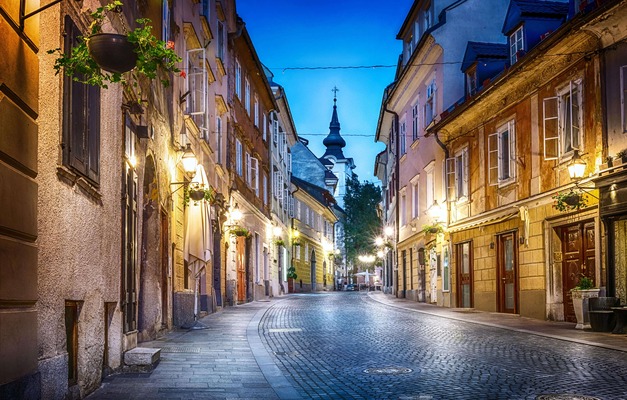
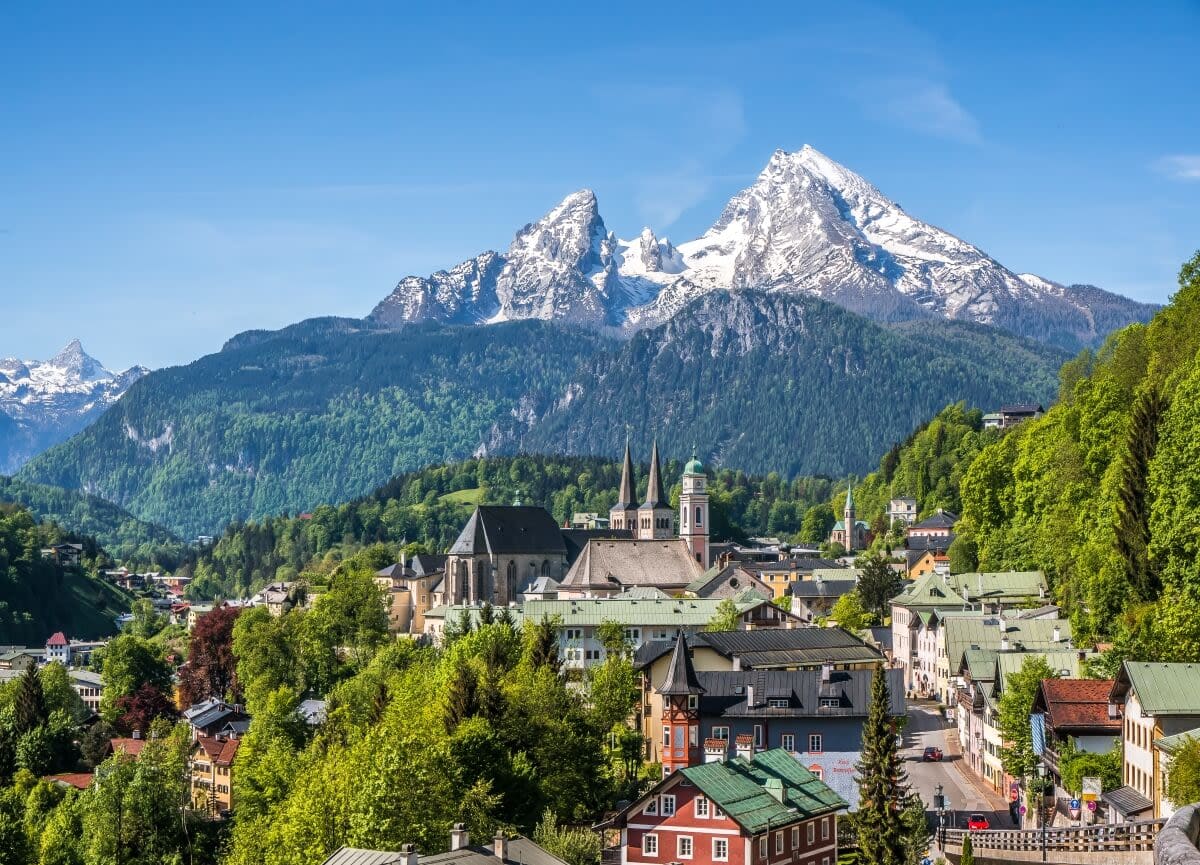
Experience Alpine Europe's breathtaking beauty and rich history with your family on this unforgettable journey through Switzerland, Germany, and Austria. Traverse the cobblestone streets of Zurich, Munich, Salzburg, & Vienna, marvel at the architectural splendor of Neuschwanstein Castle, and explore the picturesque Alpine lakes surrounding Interlaken. Enjoy private guided tours, detailed travel guidance through our mobile app, and plenty of opportunities for family-friendly adventures. From the enchanting Englischer Garten to the serene Lake Lucerne and magical Wachau Valley, every moment of this trip promises to create lasting memories.
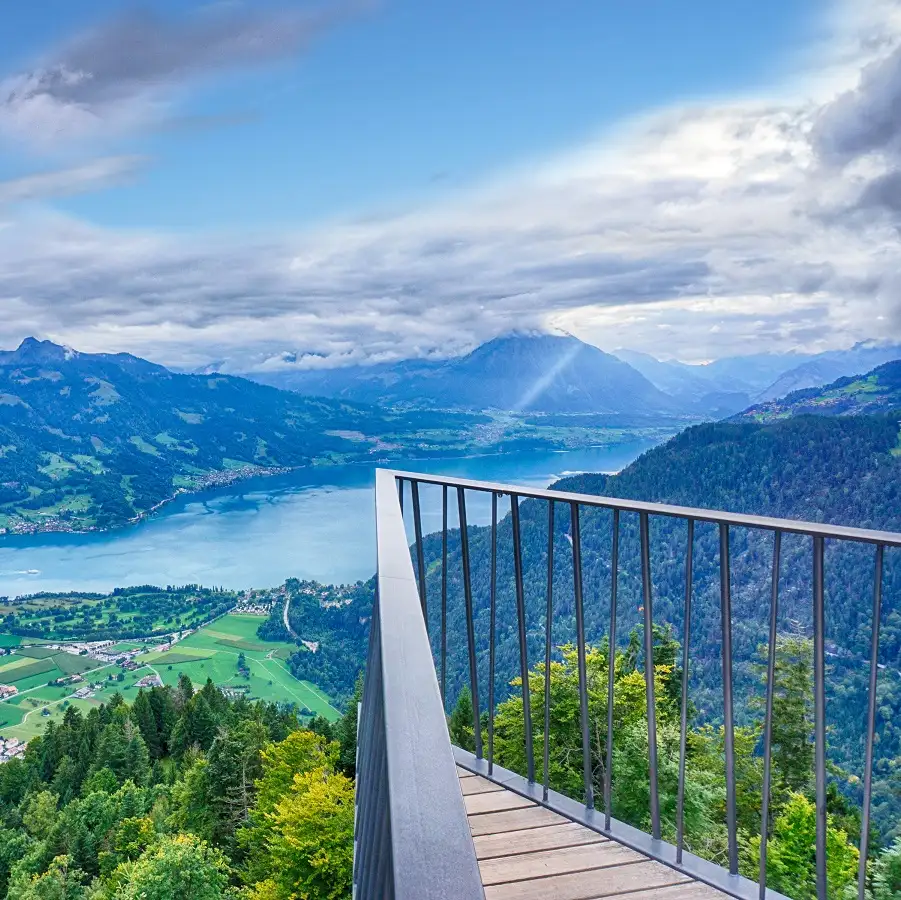
Ascend to the Jungfraujoch for breathtaking views, an ice palace, and thrilling Alpine experiences.
Discover the fairy-tale Neuschwanstein Castle on an excursion into the Bavarian Alps.
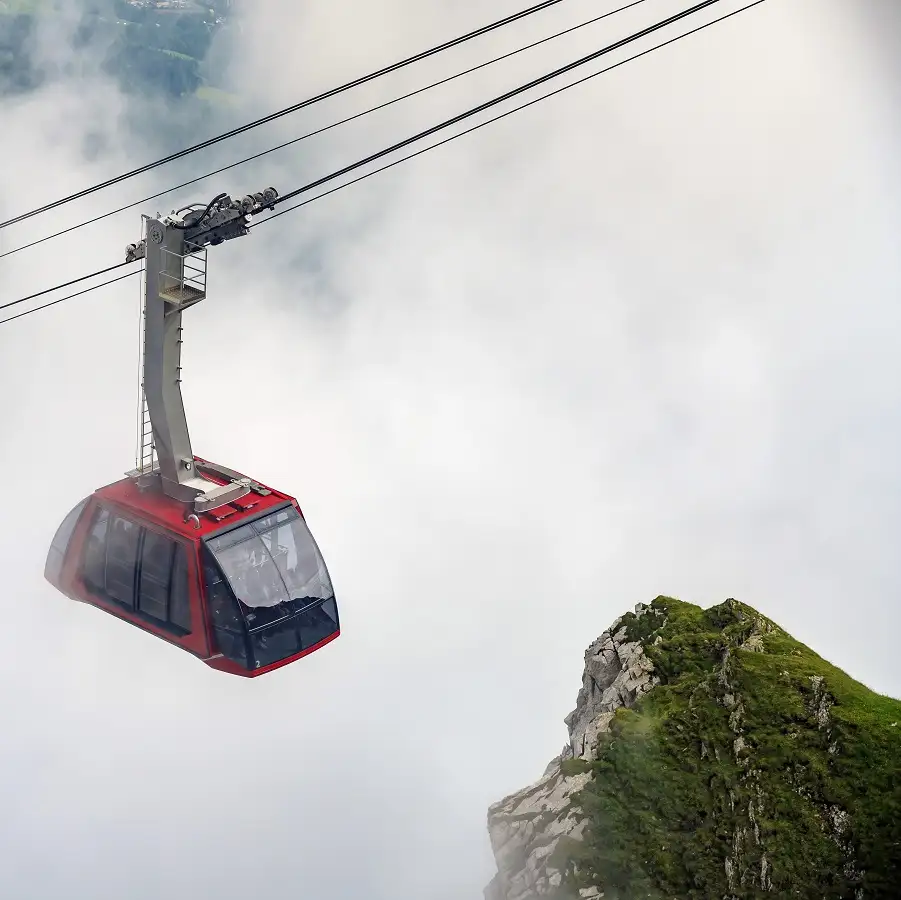
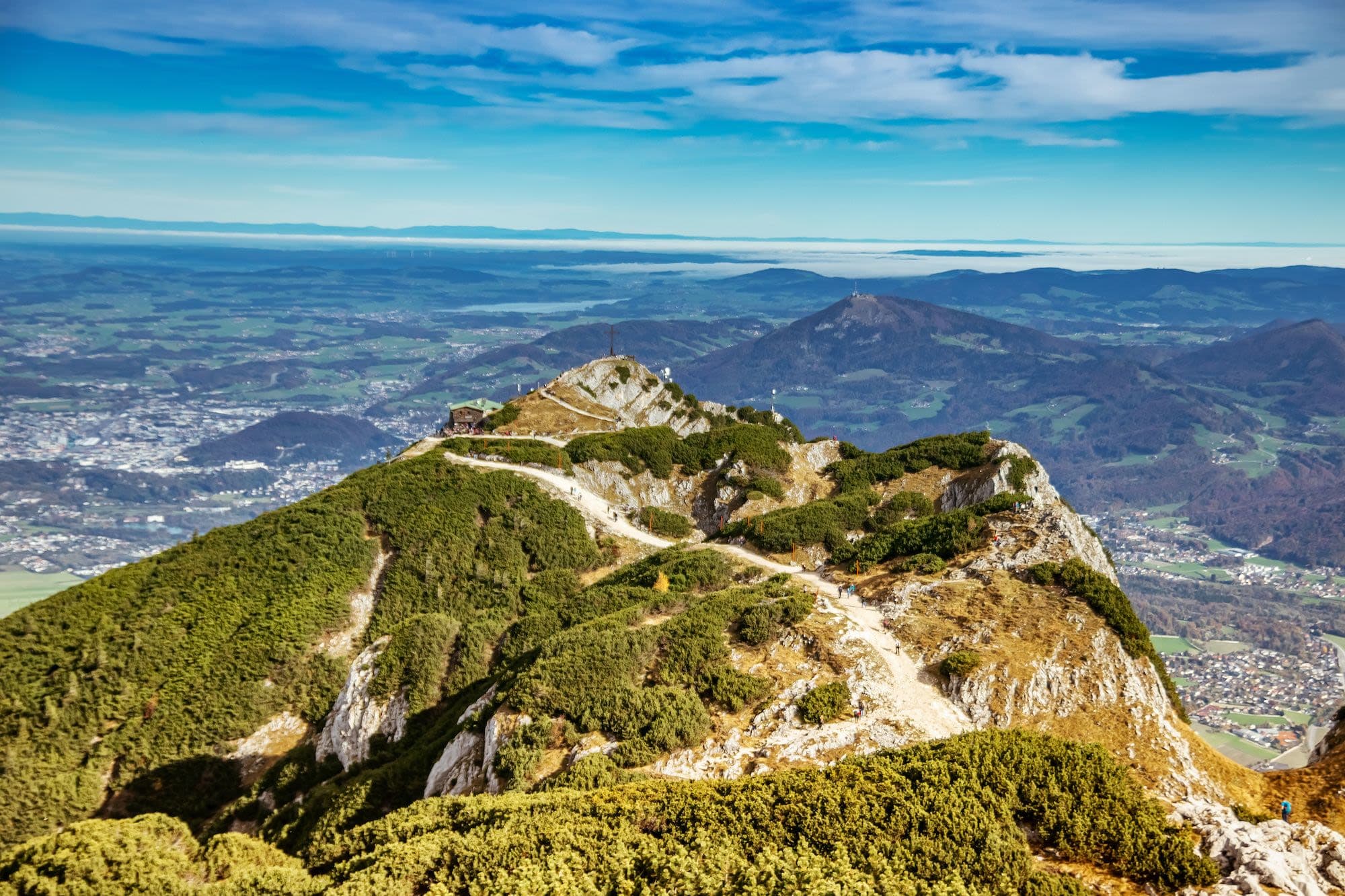
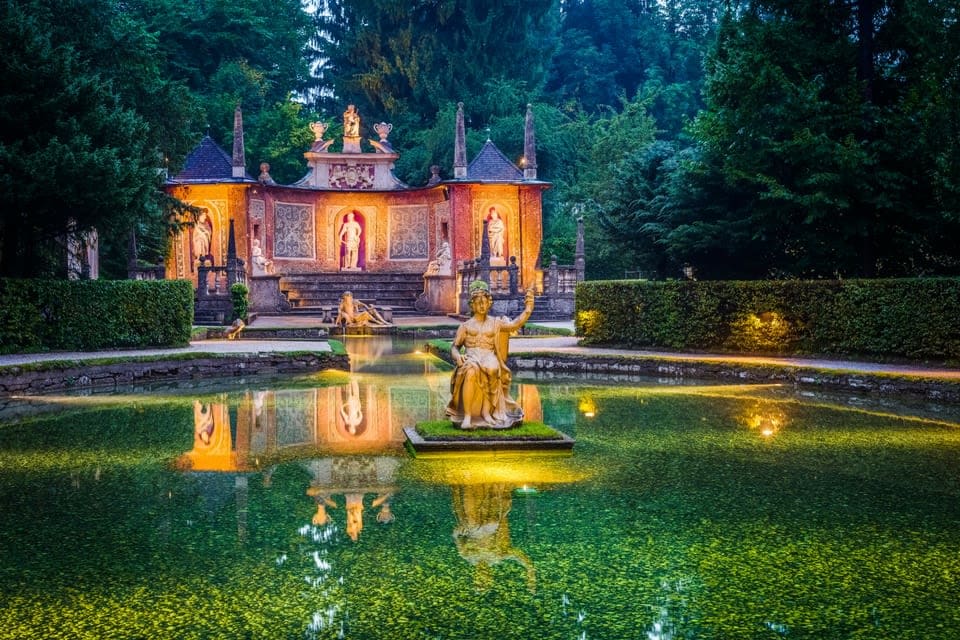
Ascend the Untersberg by a scenic cable car and dodge trick fountains in Hellbrunn Palace’s gardens.
Wander through Munich’s beautiful English Garden, one of Europe’s largest urban parks.
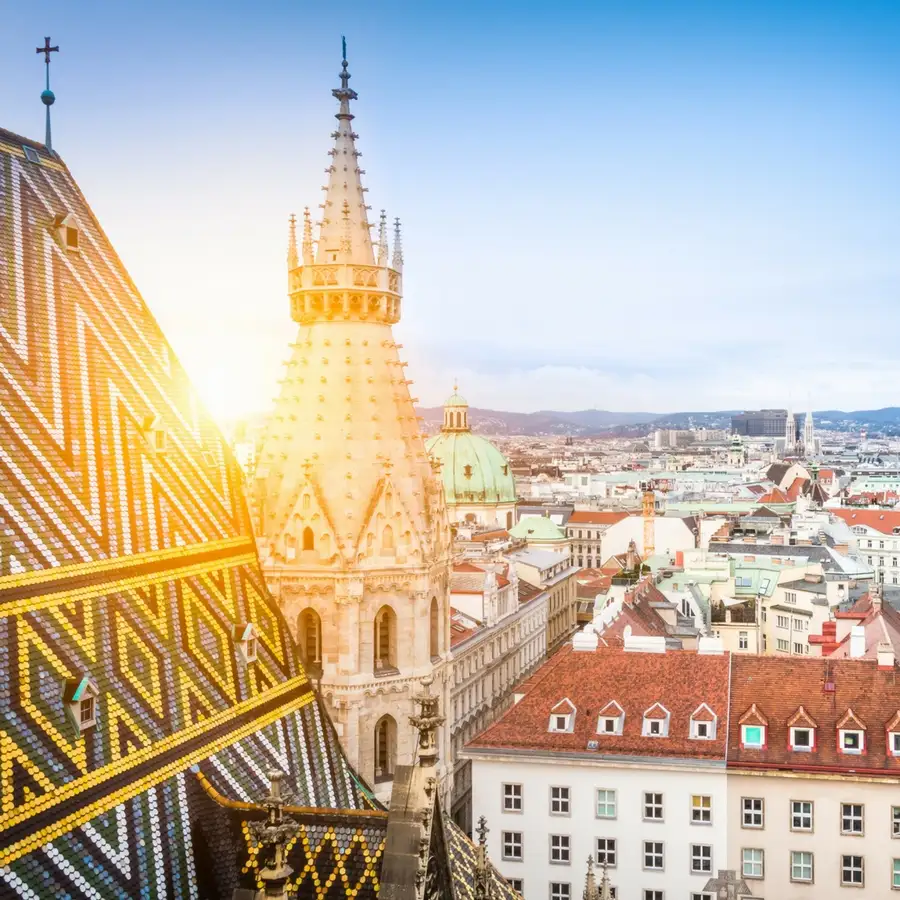
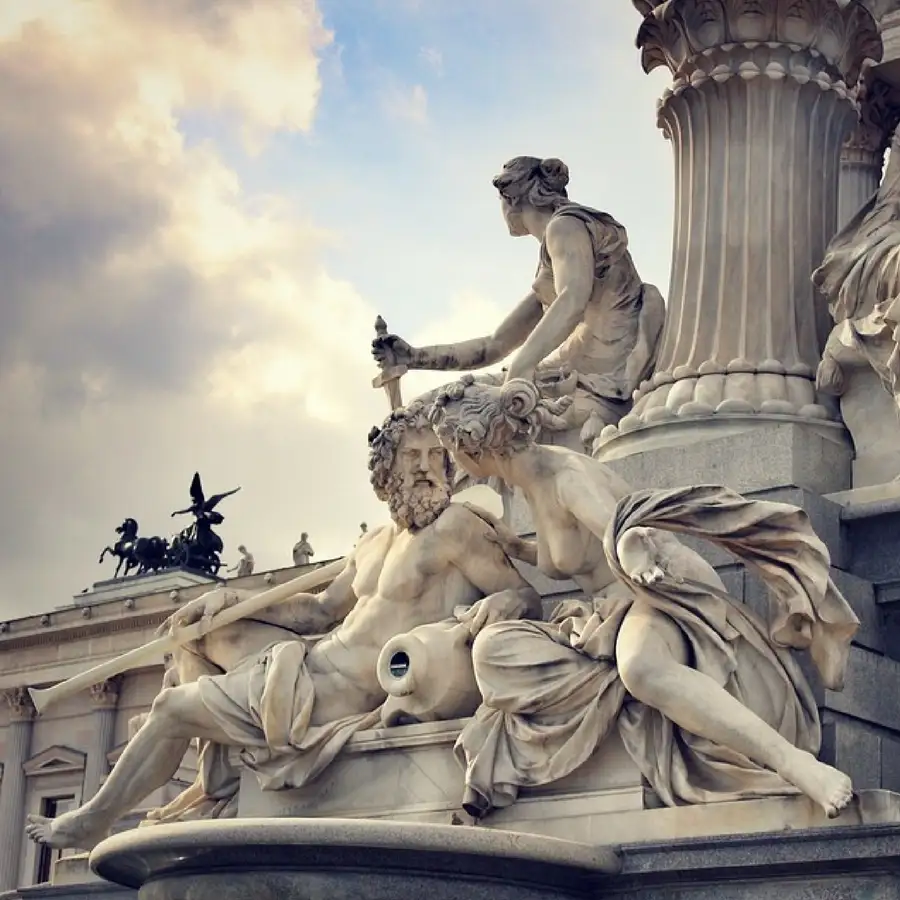
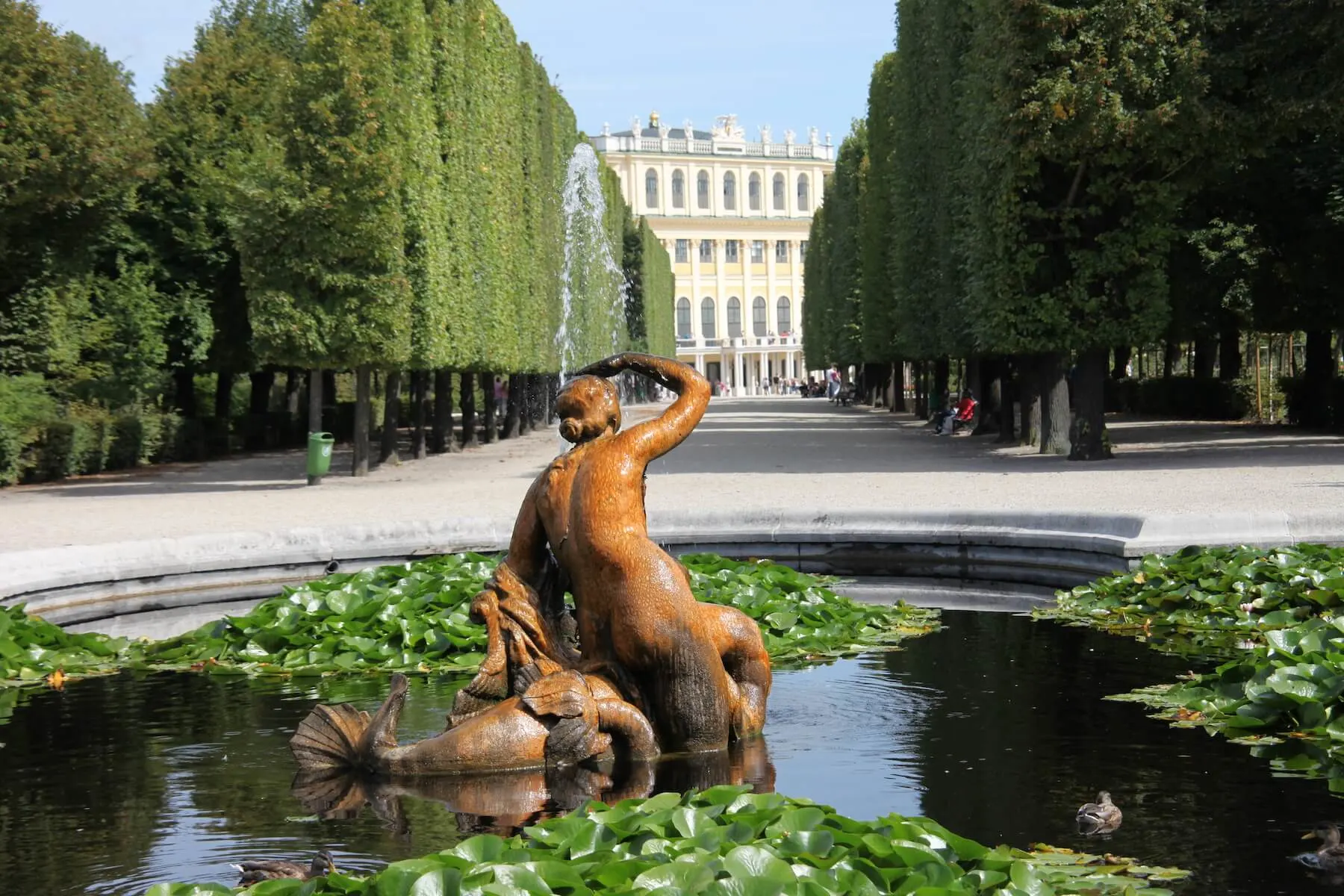
Enjoy a private guided walking tour of Vienna’s historic Inner City and visit its sumptuous palaces.
Experience Alpine Europe's breathtaking beauty and rich history with your family on this unforgettable journey through Switzerland, Germany, and Austria. Traverse the cobblestone streets of Zurich, Munich, Salzburg, & Vienna, marvel at the architectural splendor of Neuschwanstein Castle, and explore the picturesque Alpine lakes surrounding Interlaken. Enjoy private guided tours, detailed travel guidance through our mobile app, and plenty of opportunities for family-friendly adventures. From the enchanting Englischer Garten to the serene Lake Lucerne and magical Wachau Valley, every moment of this trip promises to create lasting memories.
Ascend to the Jungfraujoch for breathtaking views, an ice palace, and thrilling Alpine experiences.
Discover the fairy-tale Neuschwanstein Castle on an excursion into the Bavarian Alps.
Ascend the Untersberg by a scenic cable car and dodge trick fountains in Hellbrunn Palace’s gardens.
Wander through Munich’s beautiful English Garden, one of Europe’s largest urban parks.
Enjoy a private guided walking tour of Vienna’s historic Inner City and visit its sumptuous palaces.
Fraumunster
Churches & Monasteries
Lake Zurich
Natural Beauty
Unterseen
Small Towns
Interlaken Monastery & Castle
Castles & Chateaux
Hohematte Park
Natural Beauty
Old Town
Architecture
Residence Palace
Castles & Chateaux
Hohensalzburg Fortress
Castles & Chateaux
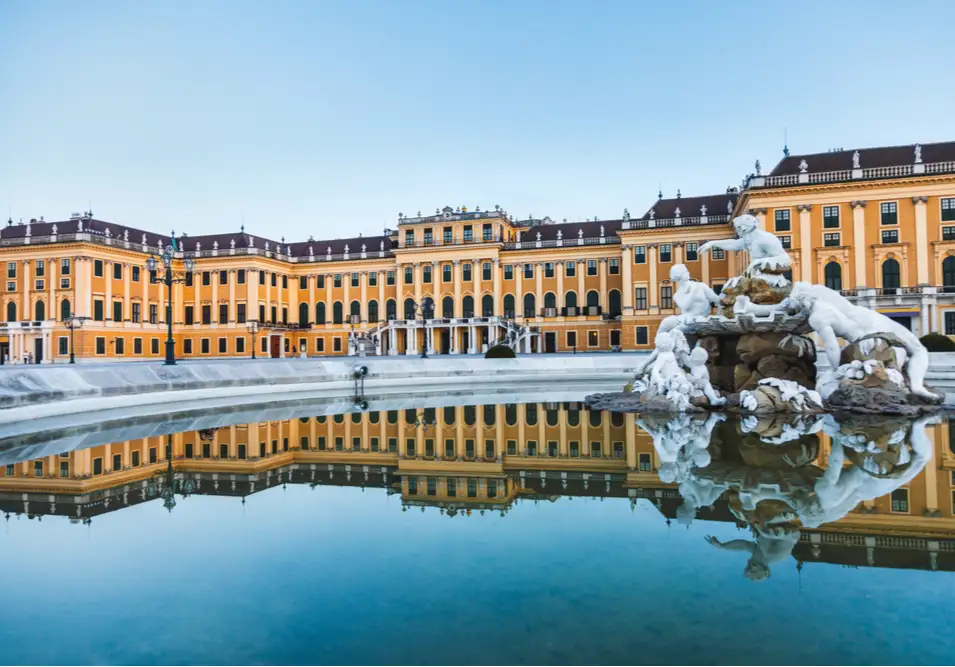
Schönbrunn Palace & Zoo
Parks & Gardens
Must see sights
Fraumunster
Churches & Monasteries
Lake Zurich
Natural Beauty
Unterseen
Small Towns
Interlaken Monastery & Castle
Castles & Chateaux
Hohematte Park
Natural Beauty
Old Town
Architecture
Residence Palace
Castles & Chateaux
Hohensalzburg Fortress
Castles & Chateaux
Schönbrunn Palace & Zoo
Parks & Gardens
Starting from
$3775
per person
Not included
Price varies by group size, hotel selection, and travel season.
Secure Your Customizable Trip
Enter your details to embark on a journey that can be tailored just for you.
Start
Travelers
0 travelers
Add Room
Remove Room
Preferred Hotel Stars
Select Hotel Stars
Craft Your Own Itinerary
Select your interests and destinations for a trip plan inspired by you.
What Does the Enchanting Family Alps Trip Itinerary Look Like?
Day 1
Arrive Zurich
Day 1
Arrive Zurich
Mid-Day/Afternoon
West Bank, Self-Guided
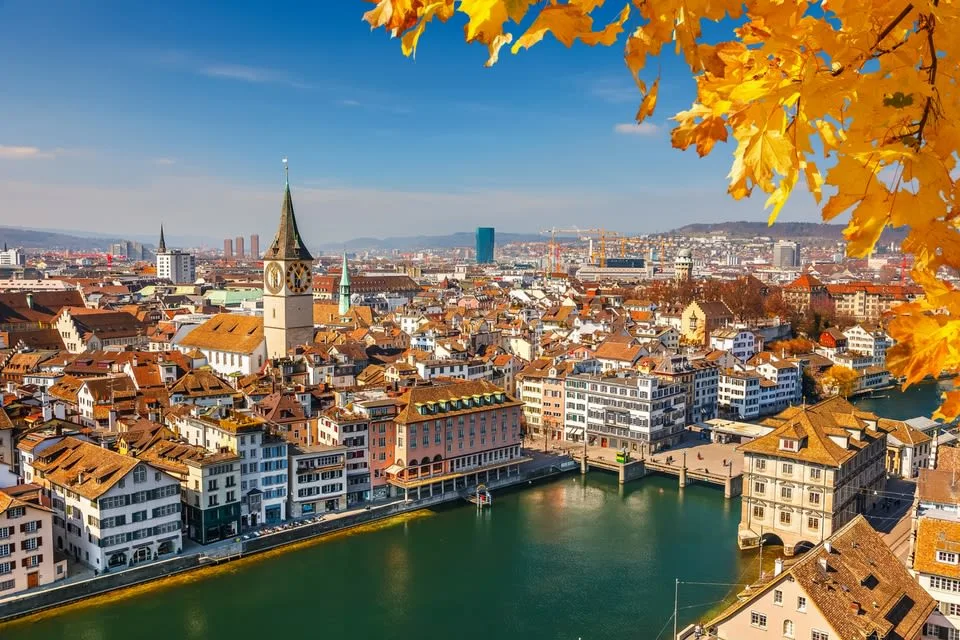
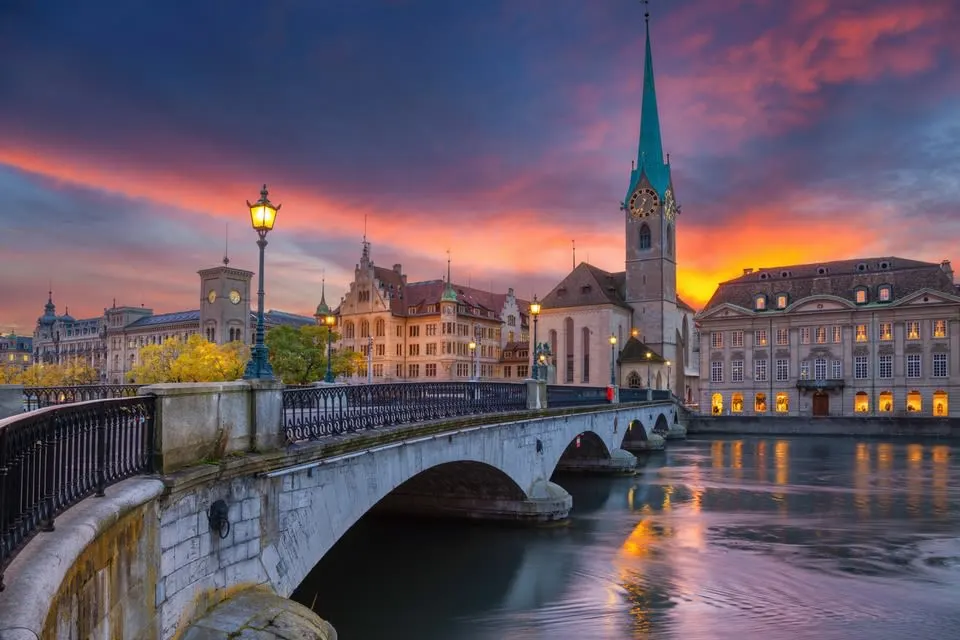
A wander around the West Bank of Zürich's Limmat River will help you experience the city's development over the centuries, from its iconic Fraumünster church, the rise of its famous banking industry around Paradeplatz, its associations with the Irish writer James Joyce, and its impact on modern sporting history at the FIFA World Football Museum.
James Joyce Foundation
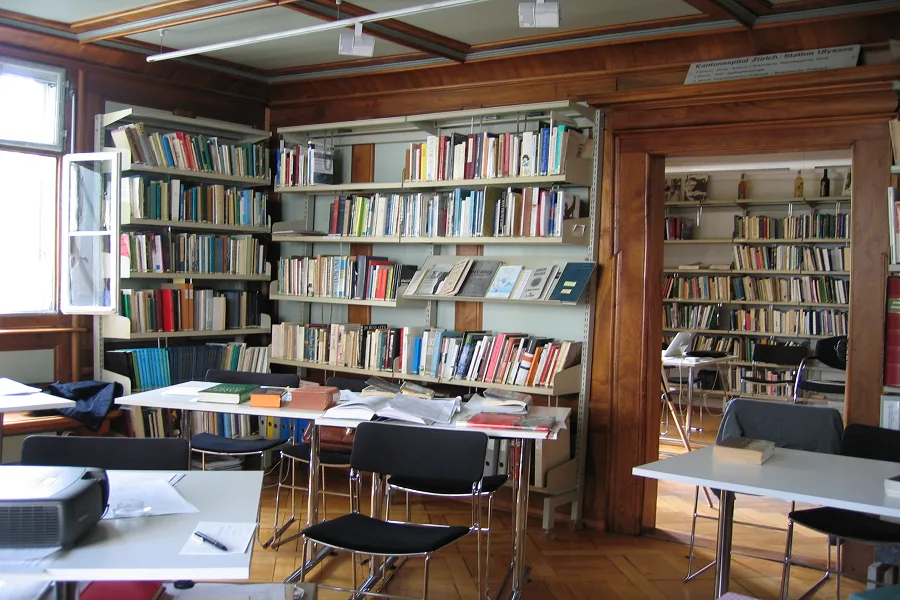
Museum dedicated to the great Irish writer, James Joyce, wrote Ulysses during his wartime exile in Zurich from 1915-19
Show More
FIFA World Football Museum
Modern museum with over 1000 displays on football (soccer)
Show More
Self Guided Visit to Zürich's West Bank
Schweizerisches Landesmuseum (Swiss National Museum)
Museum displaying Swiss history
Show More
James Joyce Foundation
Museum dedicated to the great Irish writer, James Joyce, wrote Ulysses during his wartime exile in Zurich from 1915-19
Show More
FIFA World Football Museum
Modern museum with over 1000 displays on football (soccer)
Show More
Self Guided Visit to Zürich's West Bank
Schweizerisches Landesmuseum (Swiss National Museum)
Museum displaying Swiss history
Show More
prev
next
Day 1
Arrive Zurich
Day 1
Arrive Zurich
To Be Determined:
Zurich Airport Pickup
Mid-Day/Afternoon:
West Bank, Self-Guided
Late Afternoon/Early Evening:
East Bank, Self Guided
James Joyce Foundation
Highlight of West Bank, Self-Guided
Museum dedicated to the great Irish writer, James Joyce, wrote Ulysses during his wartime exile in Zurich from 1915-19
Museum dedicated to the great Irish writer, James Joyce, wrote Ulysses during his wartime exile in Zurich from 1915-19
Show More
FIFA World Football Museum
Highlight of West Bank, Self-Guided
Modern museum with over 1000 displays on football (soccer)
Covering three floors in total, the museum traces the history of the game, FIFA, and both men's and women's World Cup competitions. Football junkies will delight in the details and memorabilia like old programs, shirts, boots and footballs, and even an unopened bottle of champagne from England's 1966 World Cup celebrations.
Show More
West Bank, Self-Guided
Overview
West Bank, Self-Guided
A wander around the West Bank of Zürich's Limmat River will help you experience the city's development over the centuries, from its iconic Fraumünster church, the rise of its famous banking industry around Paradeplatz, its associations with the Irish writer James Joyce, and its impact on modern sporting history at the FIFA World Football Museum.
Show More
Schweizerisches Landesmuseum (Swiss National Museum)
Highlight of West Bank, Self-Guided
Museum displaying Swiss history
Housed in a purpose-built mock-Gothic castle, the museum is often visited just to marvel at its architecture, but actually, this massive building has such superbly presented state-of-the-art displays on the history of the Swiss Confederation that you're sure to find something here that's worth at least an hour or two. If there's one thing the Swiss do, it's that they don't skimp on culture, so you can expect excellent value for money here.
Show More
James Joyce Foundation
Highlight of West Bank, Self-Guided
Museum dedicated to the great Irish writer, James Joyce, wrote Ulysses during his wartime exile in Zurich from 1915-19
Museum dedicated to the great Irish writer, James Joyce, wrote Ulysses during his wartime exile in Zurich from 1915-19
Show More
FIFA World Football Museum
Highlight of West Bank, Self-Guided
Modern museum with over 1000 displays on football (soccer)
Covering three floors in total, the museum traces the history of the game, FIFA, and both men's and women's World Cup competitions. Football junkies will delight in the details and memorabilia like old programs, shirts, boots and footballs, and even an unopened bottle of champagne from England's 1966 World Cup celebrations.
Show More
West Bank, Self-Guided
Overview
West Bank, Self-Guided
A wander around the West Bank of Zürich's Limmat River will help you experience the city's development over the centuries, from its iconic Fraumünster church, the rise of its famous banking industry around Paradeplatz, its associations with the Irish writer James Joyce, and its impact on modern sporting history at the FIFA World Football Museum.
Show More
Schweizerisches Landesmuseum (Swiss National Museum)
Highlight of West Bank, Self-Guided
Museum displaying Swiss history
Housed in a purpose-built mock-Gothic castle, the museum is often visited just to marvel at its architecture, but actually, this massive building has such superbly presented state-of-the-art displays on the history of the Swiss Confederation that you're sure to find something here that's worth at least an hour or two. If there's one thing the Swiss do, it's that they don't skimp on culture, so you can expect excellent value for money here.
Show More
prev
next
Day 2
Zurich
Day 2
Zurich
Early Morning to Afternoon
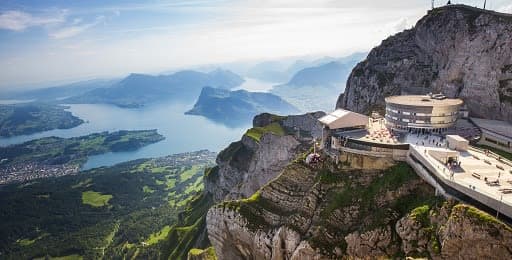
Mt Pilatus
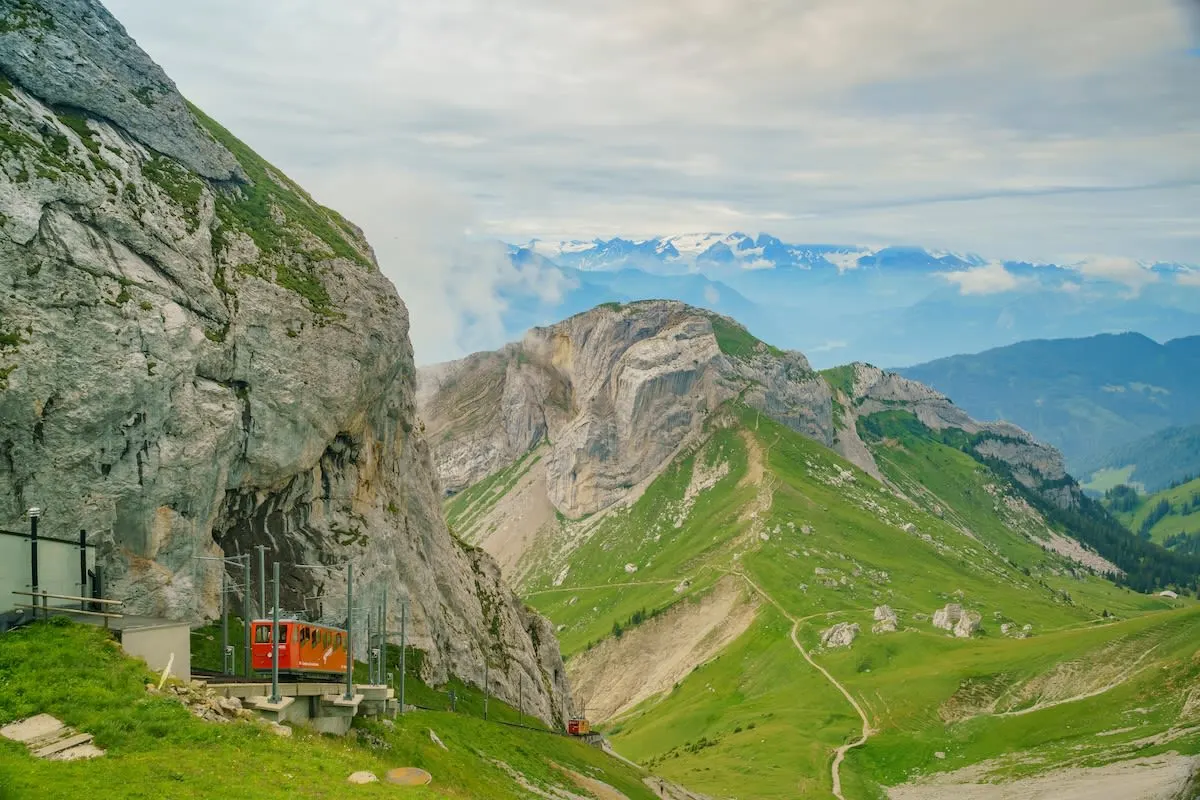
In summer months, you can ride the steepest rack-railway in the world at a gradient of nearly 48 percent from Alpnachstad up the giant mountain of Mt Pilatus that looms over the city of Lucerne. In winter you can glide up the other side of the mountain on a cable car from Kriens. The highest point, Tomlishorn, with superlative views of Lake Lucerne, is only 30min on foot from the hotels and restaurants near the top.
Self-Guided Excursion Up Mt Pilatus
Kriens-Pilatus Cable Car Station Show More
Self-Guided Excursion Up Mt Pilatus
Kriens-Pilatus Cable Car Station Show More
Self-Guided Excursion Up Mt Pilatus
Kriens-Pilatus Cable Car Station Show More
prev
next
Day 2
Zurich
Day 3
Zurich to Interlaken
Day 3
Zurich to Interlaken
9:55 AM
Taxi to Zurich Rail Station
Zurich taxis are generally reliable and honest, so this is cheaper than a pre-arranged transfer. If you are picked up one hour prior to departure, you should have plenty of time to catch your train.
Taxi Transfer to Zurich Main Rail Station
Taxi Transfer to Zurich Main Rail Station
Taxi Transfer to Zurich Main Rail Station
Taxi Transfer to Zurich Main Rail Station
Taxi Transfer to Zurich Main Rail Station
prev
next
Day 3
Zurich to Interlaken
Day 4
Interlaken
Day 4
Interlaken
Early Morning to Late Afternoon
Jungfrau
Journey directly through the famous Eiger Mountain to what the Swiss called "The Top of Europe", the icy, windswept gap in the mountain ridges known as Jungfraujoch at 3,454m/11,332ft just below the summit of Jungfrau. The train ride to the top is not cheap, but it's the highest train station in Europe and definitely an unforgettable experience.
Self-Guided Excursion up Jungfrau
Grindelwald
Village in the Bernese Alps
Show More
Self-Guided Excursion up Jungfrau
Grindelwald
Village in the Bernese Alps
Show More
Self-Guided Excursion up Jungfrau
Grindelwald
Village in the Bernese Alps
Show More
prev
next
Day 4
Interlaken
Day 5
Interlaken to Munich
Day 5
Interlaken to Munich
8:15 AM
Rail Dropoff, Self-Arrranged
Interlaken taxis are reliable and honest, so this is cheaper than a pre-arranged transfer. If you are picked up 45 minutes prior to departure, you should have plenty of time to catch your train.
Taxi Dropoff at Rail Station
Taxi Dropoff at Rail Station
Taxi Dropoff at Rail Station
Taxi Dropoff at Rail Station
Taxi Dropoff at Rail Station
prev
next
Day 5
Interlaken to Munich
Day 6
Munich
Day 6
Munich
9:00 AM - 11:30 AM
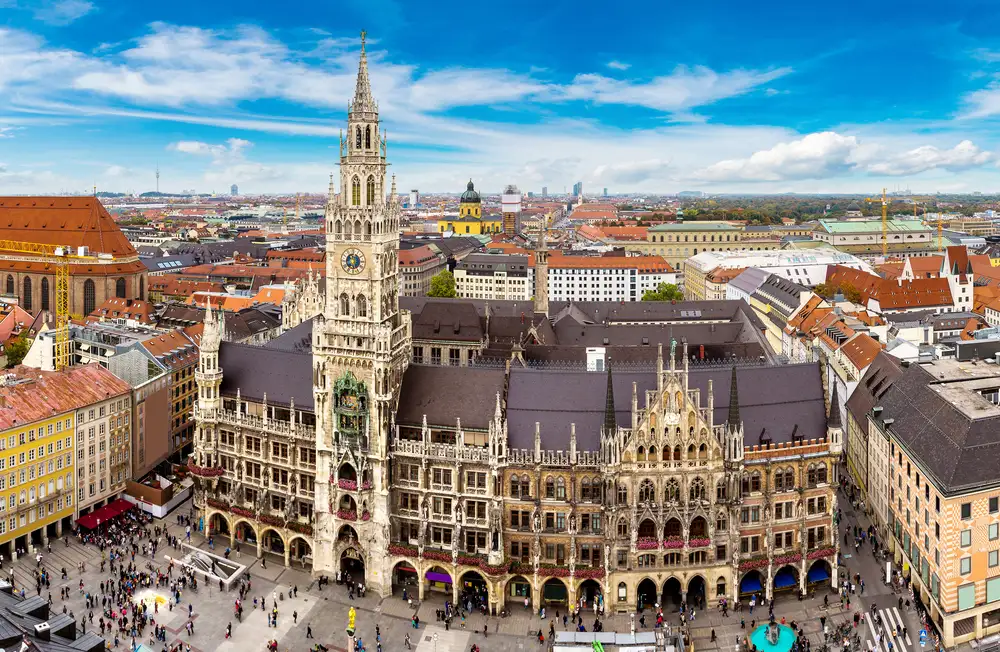
Guided Walk Tour of Historic Munich
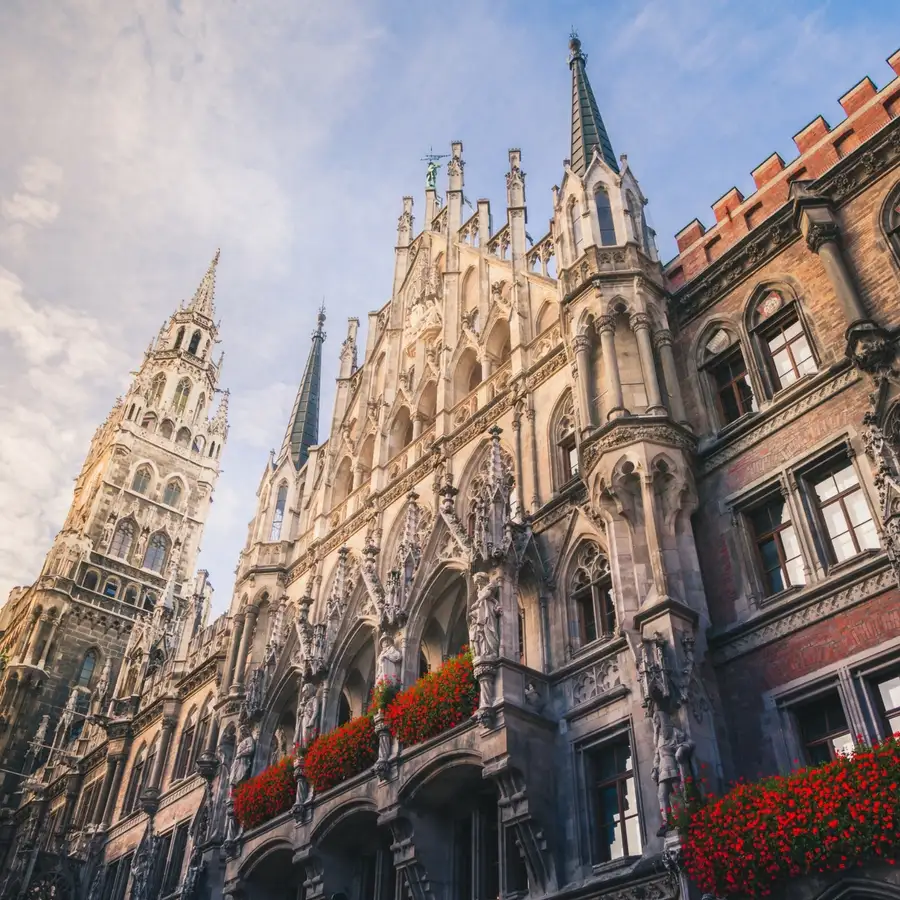
Munich contains many reminders of a long and varied history but also encompasses the modern features of a strong and vibrant city. The insights of a local help make sense of the traditions, trends, and promises of Bavaria's Capital - sometimes referred to as the city of laptops and lederhosen. On this tour, your guide will show you the highlights of Munich and point out the many hidden treasures.
Guided Walk Tour of Historic Munich
Guided Walk Tour of Historic Munich
Guided Walk Tour of Historic Munich
Guided Walk Tour of Historic Munich
Guided Walk Tour of Historic Munich
prev
next
Day 6
Munich
Day 7
Munich
Day 7
Munich
Morning/Mid-Day
Deutsches Museum
The Deutsches Museum (i.e., the German Museum) is the world's largest museum of science and technology. It is located on a small island in the River Isar, which flows through central Munich. The museum's vast and fascinating collection is spread out among 40 different exhibitions. You will encounter examples of technology stretching across humanity's long history, from a reproduction of pre-historic cave paintings to the laboratory where the atom was split.
Visit to the Deutsches Museum
Visit to the Deutsches Museum
Visit to the Deutsches Museum
Visit to the Deutsches Museum
Visit to the Deutsches Museum
prev
next
Day 7
Munich
Day 8
Munich to Salzburg
Day 8
Munich to Salzburg
Morning/Mid-Day
BMW Museum & Olympiapark
If you have a passion for cars and German engineering precision, then you'll love the shrines to one of Germany's finest automobiles - the ultra-modern BMW Museum and the futuristic-looking BMW World. Adjacent to BMW World are the extensive and beautifully sculpted grounds of 1972's Olympic Park built on top of the mountain of rubble transported there during the post-WWII city clean-up operation.
Visit to the BMW Museum and the 1972 Olympic Park
Visit to the BMW Museum and the 1972 Olympic Park
Visit to the BMW Museum and the 1972 Olympic Park
Visit to the BMW Museum and the 1972 Olympic Park
Visit to the BMW Museum and the 1972 Olympic Park
prev
next
Day 8
Munich to Salzburg
Day 9
Salzburg
Day 9
Salzburg
9:00 AM - 11:30 AM
Guided Walking Tour of Salzburg
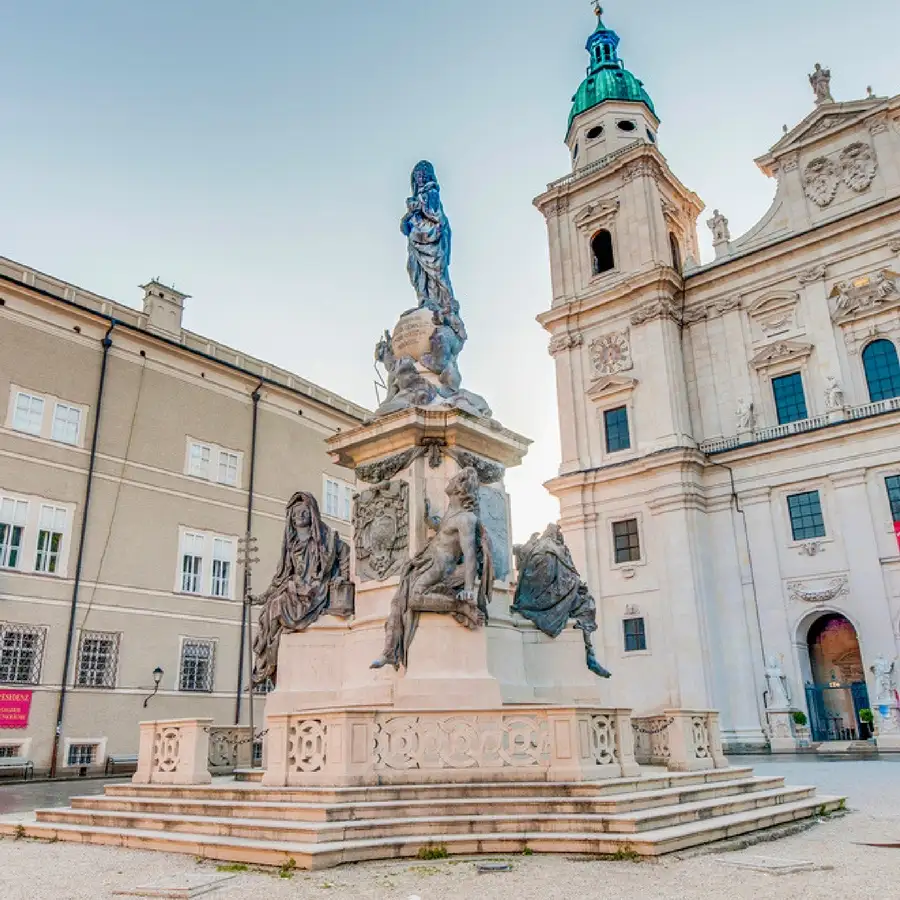
Salzburg is simply overwhelming in all the best ways. It is alive with fascinating history, grandiose and sublime architecture fills every street and square, culture and music permeate the atmosphere, and it is surrounded by breath-taking natural scenery. This guided tour with a local will provide the context needed to bring all of this beauty into perspective, and to connect the physical city to its history, culture, and environment.
Mozartplatz
One of several grand squares in the center of Altstadt in Salzburg.
Show More
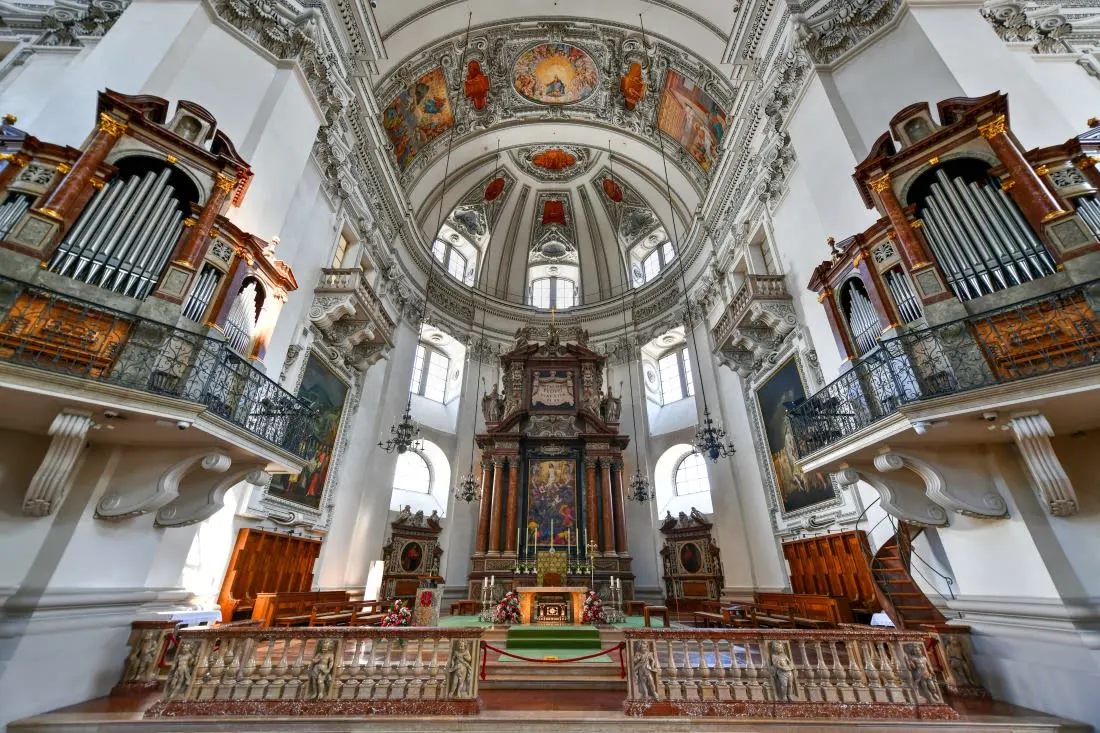
Salzburg Cathedral
Step beneath Salzburg Cathedral’s immense dome to experience the monumental Baroque church at the heart of the city.
Show More
Guided Walking Tour of Salzburg
Mozartplatz
One of several grand squares in the center of Altstadt in Salzburg.
Show More
Salzburg Cathedral
Step beneath Salzburg Cathedral’s immense dome to experience the monumental Baroque church at the heart of the city.
Show More
Guided Walking Tour of Salzburg
Mozartplatz
One of several grand squares in the center of Altstadt in Salzburg.
Show More
prev
next
Day 9
Salzburg
Day 10
Salzburg to Vienna
Day 10
Salzburg to Vienna
Early Morning to Mid-Day
Untersberg Peak
The nearly 6,000-foot high Untersberg is Salzburg's nearest Alpine Mountain, and a visit to its peak is the perfect way to experience the Alps without traveling too far. Don't worry, there's no need to bring your climbing gear. You can take a bus from Salzburg to the base of the mountain, and then take an exhilarating cable lift ride all the way to the limestone summit. There you will find a stupendous view of the Alps spread out before you, and if you feel like wandering a bit, a network of rocky trails spreads out from the summit. The Salzburg card covers both the bus ride to the lift (it's the last stop of bus line #25) and the cable car tickets!
Excursion to the Peak of the Untersberg
Excursion to the Peak of the Untersberg
Excursion to the Peak of the Untersberg
Excursion to the Peak of the Untersberg
Excursion to the Peak of the Untersberg
prev
next
Day 10
Salzburg to Vienna
Day 11
Vienna
Day 11
Vienna
9:00 AM - 11:30 AM
Guided Walk of the Inner City
This tour takes you back in history to explore the Vienna that stood within the old city walls. You will learn about the humble beginnings of Vienna before it became the capital of a great empire and one of the most important cities in Europe. You will discover how Vienna's early inhabitants lived and how they left their mark on the city and its beautiful Medieval, Renaissance, and Baroque architecture.
Guided Walk through Vienna's Inner City
Guided Walk through Vienna's Inner City
Guided Walk through Vienna's Inner City
Guided Walk through Vienna's Inner City
Guided Walk through Vienna's Inner City
prev
next
Day 11
Vienna
Day 12
Vienna
Day 12
Vienna
Morning/Mid-Day
Schönbrunn Palace
The magnificent Baroque palace of Schönbrunn is most famously associated with Empress Maria Theresa, who lived here surrounded by 16 little archdukes and duchesses who also happened to be her children. On your tour of the palace, you will see how Maria Theresa and other past imperial residents lived. No visit is complete without a stroll in the vast gardens surrounding the palace.
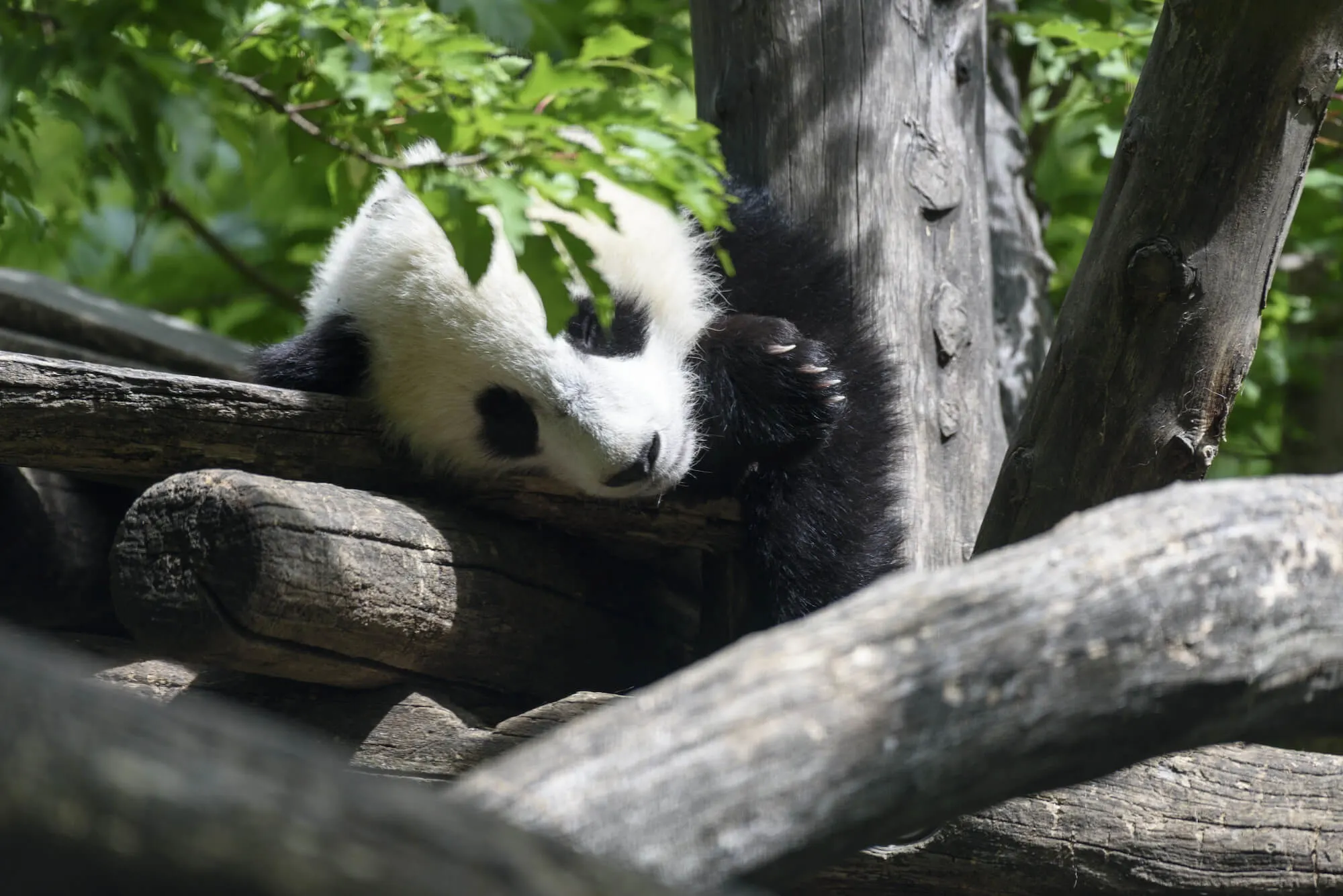
Schönbrunn Zoo
Join local families enjoying one of Europe's best zoos.
Show More
Schönbrunn Gardens
Get lost in the huge imperial gardens.
Show More
Tour the Schönbrunn Palace
Schönbrunn Zoo
Join local families enjoying one of Europe's best zoos.
Show More
Schönbrunn Gardens
Get lost in the huge imperial gardens.
Show More
Tour the Schönbrunn Palace
Schönbrunn Zoo
Join local families enjoying one of Europe's best zoos.
Show More
prev
next
Day 12
Vienna
Day 13
Vienna
Day 13
Vienna
Early Morning to Late Afternoon
Wachau Valley
A one-and-a-half-hour train ride from Vienna brings you to the town of Melk, where you can tour the vast Melk Abbey. From there you can begin a 22-mile cruise through the Wachau Valley, considered the most beautiful stretch of the entire Danube River. You'll pass medieval castle ruins, hills covered in vineyards, and several charming villages, where you can debark to try some wine or take a hike up to a castle. The valley is also a perfect destination for cyclers and winery tours.
Spitz
Stop to taste the wine in a postcard-pretty town surrounded by vineyards.
Show More
Dürnstein
Explore the twisting narrow lanes of this delightful monastery town.
Show More
Dürnstein Castle Ruins
Hike to the dramatic ruins of a medieval castle built in 1100's.
Show More
Danube Cruise in the Scenic Wachau Valley
Melk Abbey
Tour a huge and splendid Baroque monastery.
Show More
Spitz
Stop to taste the wine in a postcard-pretty town surrounded by vineyards.
Show More
Dürnstein
Explore the twisting narrow lanes of this delightful monastery town.
Show More
Dürnstein Castle Ruins
Hike to the dramatic ruins of a medieval castle built in 1100's.
Show More
Danube Cruise in the Scenic Wachau Valley
Melk Abbey
Tour a huge and splendid Baroque monastery.
Show More
Spitz
Stop to taste the wine in a postcard-pretty town surrounded by vineyards.
Show More
prev
next
Day 13
Vienna
Day 14
Depart Vienna
Day 14
Depart Vienna
To Be Determined
Taxi Transfer to Vienna Airport
Vienna taxis are generally reliable and honest, so taking a taxi is cheaper than a pre-arranged transfer. Your hotel will be happy to arrange a pick up for you. If you are picked up three hours prior to departure, you should have plenty of time to catch your flight. If you are leaving during rush hour, you may want to budget an extra fifteen minutes or so.
Transfer to the Vienna Airport by Public Taxi
Transfer to the Vienna Airport by Public Taxi
Transfer to the Vienna Airport by Public Taxi
Transfer to the Vienna Airport by Public Taxi
Transfer to the Vienna Airport by Public Taxi
prev
next
Day 14
Depart Vienna
What's Included in the Enchanting Family Alps Trip?
Pre-Paid Tours and Activities:
Private Introductory tour of the Zurich Old Town
Guided Walk Tour of Historic Munich
Guided Walking Tour of Salzburg
Guided Walk through Vienna's Inner City
City Card for Munich, including discounts to many popular attractions
Pre-Paid Transportation:
2nd Class Train Tickets from Interlaken to Zurich
2nd Class Train Tickets from Zurich to Munich
2nd Class Train Tickets from Munich to Salzburg
2nd Class Train Tickets from Salzburg to Vienna
Public Transport Tickets for Munich and Vienna
Swiss Travel Pass
Private Transfer from the Zurich Airport
Accommodation:
2 nights at a hotel of your choice in Zurich
2 nights at a hotel of your choice in Interlaken
3 nights at a hotel of your choice in Munich
2 nights at a hotel of your choice in Salzburg
4 nights at a hotel of your choice in Vienna
Go Real Travel Mobile App:
Itinerary Plan & Reservations Info
Points of Interest
Detailed Travel Information
Maps & Directions
Other Trips You May Like
10 Days
From$3691USD
Peaks to Palaces: 10 Days in Switzerland, Germany, and Austria
See what travelers who went to these destinations have to say.
4.9/5
Average traveler rating
Based on 97 traveler reviews
Trustpilot (75)
Facebook (16)
Go Real Travel Reviews (6)
Recommends us Facebook
absolutely excellent! Trip of a lifetime. Thank you so much Jarod for planning out every single detail for us. The guides were fabulous, the hotels were beautiful and very close to everything we wanted to see. I would highly recommend this company to anyone. The Only way to travel !!!!
Recommends us Facebook
Go Real Travel planned a great 2-week itinerary for us that included Munich, Salzburg, Vienna and Prague. They made great hotel arrangements for us as well as train and local transportation, a few local guides links. Great trip, top notch sights and very detailed instructions. With the itinerary in hand, we still had the freedoms to pick and choose what to do and where to be - it combined the best elements of a tour with I depended travel. Highly recommended!!!
Recommends us Facebook
I used Go Real Travel for a 10 day trip to Europe (Salzburg, Prague and Munich). They gave me some excellent advice on the front end about locations and timing, arranged hotels for me to choose from, car services, train tickets and private tour guides - it was an amazing trip. In addition they were available and responsive the entire time with last minute questions and requests - highly recommend them and have already started planning my next trip with them.
Recommends us Facebook
I highly recommend Go Real Europe for anyone looking to avoid the logistical nightmare that is planning a mult-city, multi-country trip through central Europe. Martin planned a seamless and awesome trip for us through Munich, Salzburg, Cesky Krumlov, Prague, Vienna, and Budapest. The attention to detail was unparalleled, with meticulous directions to each spot and thorough background information. Our transportation was planned ahead of time in most cases, leaving us without the hassle of buying train and bus tickets. The tour guides we had in each city were above expectation, and thoroughly enhanced our appreciation of each city. We enjoyed a 21 mile bike ride through the Czech countryside, as well as cuisine tours in 3 cities. The hotels were all in great locations, and we felt perfectly safe and content in each one. All in all, our trip was spectacular, due in large part to how well planned it was by Go Real Europe. We look forward to using their services again in the future! It was a true pleasure.
Recommends us Facebook
We had a wonderful experience. The tours were great. We did have a tiny hiccup but we figured it out.
Recommends us Facebook
Excellent experience with GoRealEurope! Since I knew nothing about the area, I was hesitant to tackle planning a Christmas holiday trip to Vienna and Salzburg. GoRealEurope tailored the trip to our interests and provided an extremely detailed itinerary complete with landmarks and background information on each of the sites we visited. They also made hotel reservations and provided tickets, travel instructions, and taxi arrangements for all local and inter-city transportation. Our agent, Brendan, arranged to have private English speaking tours that provided an overview of our destination cities, and also set up dinner reservations for several evenings of our stay. All in all, my husband, myself, and my children (age 21 and 19) had a wonderful time. I would not hesitate to recommend them to anyone. My one suggestion would be to include the name of the Google Maps destination in some of the walking directions, as we found it easier to follow our phone map than the printed instructions in those cases. Also, once the initial itinerary is established, the customer needs to review carefully and be proactive in contacting the agent in order to make changes. Since we were traveling over Christmas, some tweaks were needed to account for holiday closings.
prev
next
What Travelers Say About Go Real Travel
Our latest reviews from across all trips on Trustpilot.
Is 14 days enough to see Zurich, Interlaken, Munich, Salzburg, and Vienna?
Yes, 14 days is a really good amount of time. You’ll spend two nights in Zurich, two in Interlaken, three in Munich, two in Salzburg, and four in Vienna. That’s long enough to enjoy the highlights of each place without feeling like you are rushing every day. Because hotels, train tickets, transfers, and guides are already arranged, you spend your time exploring instead of figuring out logistics.
Do I need to speak German to visit Switzerland, Germany, and Austria?
No. English is widely spoken in Switzerland, Germany, and Austria. The app provides all your instructions in English, so you’ll get by easily. A few local words like “danke” or “grüezi” are nice to know but not required.
What’s the best season for this trip?
For cities, the best weather is in May, June, September, and early October, though these are also the busiest months. July and August are hotter but often a bit quieter in the cities as locals leave for vacation. For Interlaken, higher mountain trails can still be snow-covered in April and early May, so late May through September is the best time for hiking. December is all about Christmas markets in Munich, Salzburg, and Vienna, combined with snowy Alpine scenery.
Do I get private guides, or is everything self-guided?
You get a balance of both. In Zurich, Munich, Salzburg, and Vienna, private guides lead the main walking tours, so you can set the pace and ask questions. In Interlaken and for certain excursions you’ll explore independently, but you’re not on your own — the Go Real Travel mobile app gives detailed step-by-step directions, maps, and insider tips so self-guided days feel stress-free.
How does train travel work on this trip?
Travel between cities is by train, and it’s smooth and scenic. Zurich to Interlaken is about two hours through the Swiss countryside, Munich to Salzburg is ninety minutes, and Salzburg to Vienna is a fast Railjet taking just over two hours. Your tickets are prepaid and stored in the app with train numbers and departure times. Platforms are only announced shortly before departure, but the app explains how to read the station boards so you can quickly find the right track.
Are public transport passes included?
Yes, and they make the trip much easier. In Switzerland you have the Swiss Travel Pass, which covers trains, buses, boats, and many mountain lifts. It allows you to move easily around Zurich and Interlaken and gives major discounts on famous mountain trips such as Mount Pilatus and the Jungfraujoch. In Munich, you have a city ticket that lets you use the U-Bahn, trams, and buses during your stay. In Vienna you also have a public transport ticket, so you can hop on trams and the U-Bahn whenever you like. Salzburg is compact and walkable, though if you want to use buses the app explains exactly how.
Is the Swiss Travel Pass really worth it?
Yes, and it is one of the most valuable inclusions in the trip. Buying all the Swiss trains, mountain lifts, and boats separately would cost hundreds of francs. With the pass, your intercity travel such as Zurich to Interlaken is included, city transport in Zurich is covered, and scenic boat rides are free. Mountain trips that are normally expensive, like the Jungfraujoch, come at a discount, while Mount Pilatus is heavily reduced as well. The pass saves serious money and gives freedom to be spontaneous in Switzerland because you can hop on trains or boats without worrying about extra tickets.
Is renting a car easier?
Not for this route. Trains connect city centers directly, with no parking stress or traffic. Zurich to Interlaken is more scenic by train than by car, Munich and Vienna are not car-friendly, and Salzburg’s old town is pedestrianized. With all tickets and passes provided, trains are far more convenient.
Is it stressful moving between so many cities?
Not at all. Every ticket and transfer is pre-arranged, and the app explains how to handle stations and connections. Even large stations like Zurich HB or Munich Hbf are easy to manage when you know how to read the departure boards, which the app shows you step by step. Hotels are always central, so you’re not stuck commuting across town with luggage.
What will I do in Zurich?
In Zurich you’ll explore the old town and lakeside with time for museums and walks, and then take a full-day guided trip to Lucerne and Mount Pilatus. With the Swiss Travel Pass, much of the journey is covered, and your guide makes sure the connections are seamless. You’ll ride a cogwheel train up Mount Pilatus and descend by cable car, which is a classic Swiss experience.
What will I do in Interlaken?
Interlaken is your base for a full Alpine experience. The itinerary includes a self-guided excursion to the Jungfraujoch, known as the “Top of Europe.” With your Swiss Travel Pass, you get discounted fares, and the app gives step-by-step instructions for each train and connection. Beyond that, you can use the pass for scenic boat rides on Lake Thun or Lake Brienz, or short train trips to villages like Lauterbrunnen or Grindelwald, all explained in your guidance.
What will I do in Munich?
In Munich you’ll have a private guided walking tour that covers Marienplatz, the Glockenspiel, Frauenkirche, Odeonsplatz, and Viktualienmarkt, along with entry to the Residence Palace. You’ll also have a city transport ticket to make it easy to explore further if you wish. Optional suggestions such as visiting Nymphenburg Palace or the English Garden are explained in the app.
What will I do in Salzburg?
In Salzburg you’ll have a private guided city tour that covers Mozart’s birthplace, the historic squares, and Salzburg Cathedral. The rest of your time is flexible, with the mobile app giving suggestions and directions for optional excursions like Hellbrunn Palace or a cable car up the Untersberg. Salzburg is compact and walkable, making it easy to enjoy at your own pace.
What will I do in Vienna?
In Vienna you’ll have a private guided city tour that introduces you to the Ringstrasse, Hofburg Palace, St. Stephen’s Cathedral, and other highlights. You also have a public transport pass, which makes getting around easy. The mobile app provides instructions for booking optional timed-entry visits to Schönbrunn Palace and the Austrian Parliament.
How much walking should I expect?
It's up to you, since you are traveling independently and not in a group. But if you try to fit in most of the recommendations in the itinerary, it can be quite a lot, usually more than 10,000 steps a day. Zurich’s old town is hilly, Munich and Salzburg are very walkable, and Vienna’s historic center is best explored on foot. For guided tours you can adjust the pace as they are a private tours, and you can always take a break or skip some attractions if you feel like cutting down on the walking. We also provide public transit directions so you can avoid walking when you like, but good shoes are still essential. In Switzerland, excursions like Jungfraujoch involve walking between trains and mountain stations, but the routes are straightforward.
How do I get from Zurich Airport to the hotel?
You don’t have to figure this out on your own. A private transfer is included on arrival, so you’re met in the arrivals hall and taken directly to your hotel. It’s a smooth start to the trip with no stress about train timetables or taxis after a long flight. However, if you would like to save on this cost, we can remove the private transfer and you can take a convenient direct rail connection from the airport to the city center.
How flexible is the trip? Can I swap out cities, for instance changing Salzburg for Budapest?
Yes, the trip is customizable. You can swap destinations, add extra nights, and add extra cities to the trip.
Do I need to pre-book Schönbrunn Palace?
Yes, Schönbrunn Palace uses timed-entry tickets that are not included automatically. The app has links and instructions for booking, so it is simple to do once you know your travel dates. Schönbrunn sometimes gets very crowded in busy months, so pre-booking is recommended.
What happens if I want to do more in Switzerland?
The Swiss Travel Pass makes this easy. Beyond the planned trips to Mount Pilatus and Jungfraujoch, you can hop on boats across Lake Lucerne or Lake Thun, take trains to mountain villages, or ride funiculars up to viewpoints, all without extra hassle. The mobile app has curated suggestions that fit neatly into your schedule.
What support do I have during the trip?
The mobile app is your day-to-day guide, storing your tickets, maps, and instructions. If you ever run into problems — like a missed train — you also have access to real support from Go Real Travel staff. You’re never left on your own.
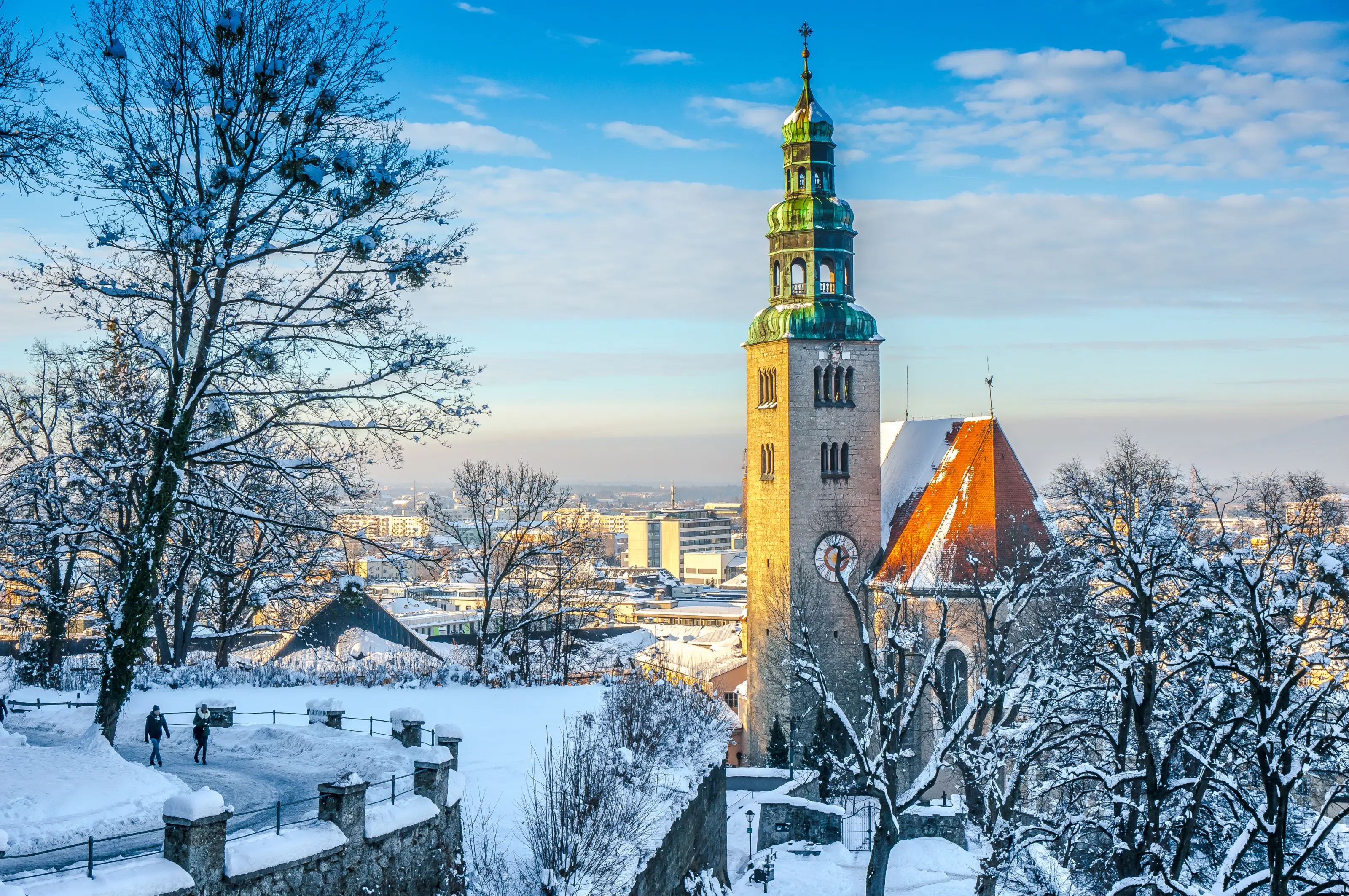
You've probably heard this before— the city of Salzburg is straight out of a fairytale. Nestled in the mountains, this romantic city's Baroque architecture with colorful domes and spires is especially striking against the ancient fortress and Austrian Alpine backdrop. If you're looking for an amazing view, climb up to Hohensalzburg Fortress, Central Europe's largest intact fortress, for a jaw-dropping panorama of the city backed by misty mountains.
Perhaps most famous for being the birthplace of the renowned composer Wolfgang Amadeus Mozart and the filming location for the classic The Sound of Music, this city has much to offer. Salzburg has become an important artistic and cultural center, featuring magnificent concert halls that uphold the city's tradition of classical music every day of the year, as well as acclaimed art exhibitions and museums. If you do it right, your visit to Salzburg will immerse you in the city's unforgettable atmosphere and keep you coming back for more.
Artistic and musical, historical and elegant, Vienna is the definition of class. The seat of the Habsburg monarchy for over six centuries, it's no wonder this city is still fit for royalty. Baroque buildings and imperial palaces dominate the cityscape, while locals stride gracefully through the streets, likely on their way to a classical music concert or art exhibition. Visitors from all over the world flock to Schonbrunn Palace, historical museums, and local eateries for authentic Viennese schnitzel.
Vienna is also home to world-class wining and dining. Famous dishes include Wiener schnitzel, Tafelspitz (prime boiled beef), and apfelstrudel (apple strudel), all of which pair well with a glass of fine Austrian wine. No matter how long you spend in Vienna, you'll leave with a new appreciation for the finer things in life.
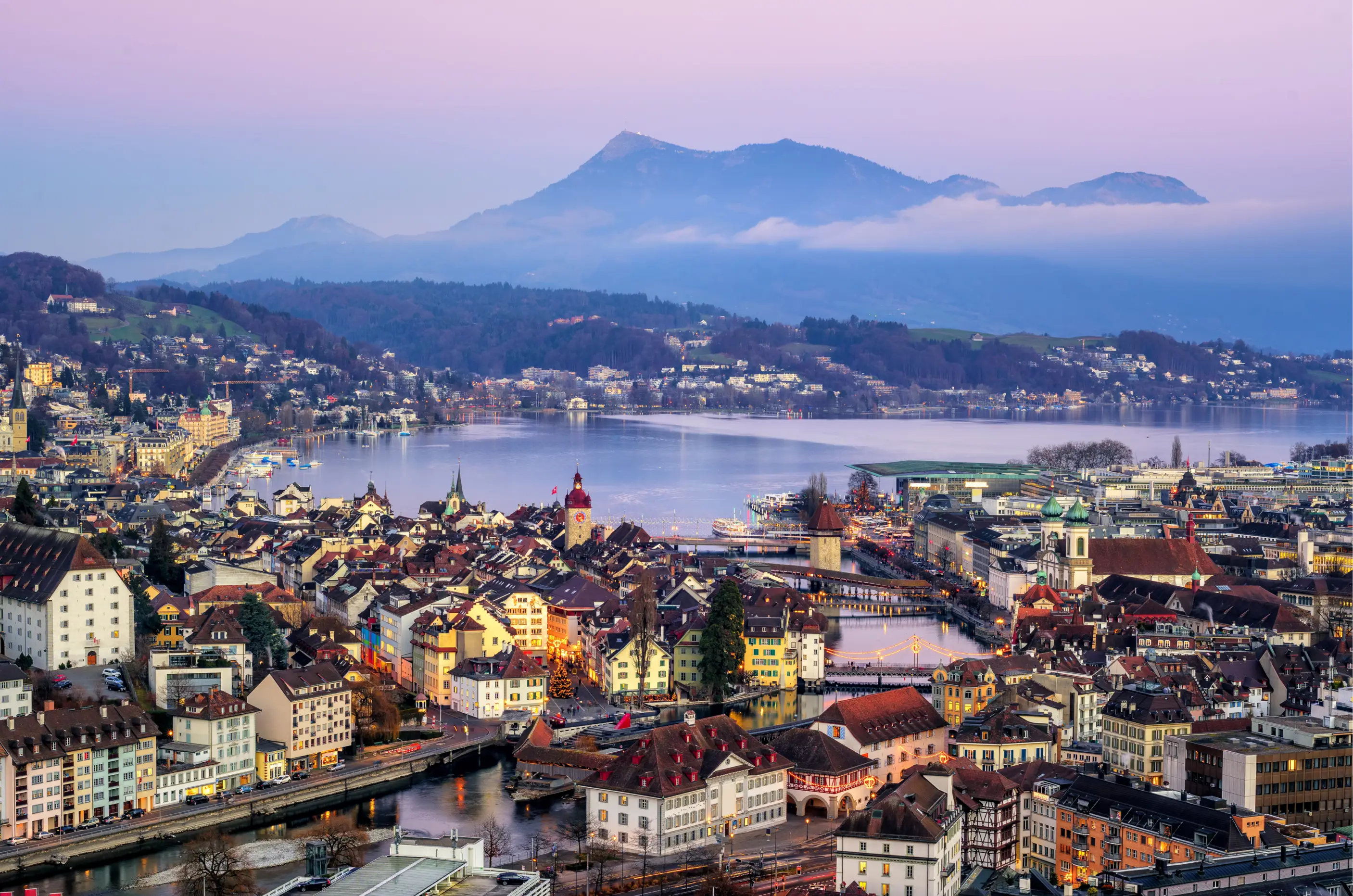
Lucerne’s international name may be French, but this spellbinding little city is actually situated in the heart of Switzerland’s German area. Lucerne was one of the first cities to join the Swiss Confederation and is a microcosm of all the typical Swiss quirks and charm that draw visitors to the country from all over the world. The city’s old town is beautifully preserved and also extremely compact. This is a place that is perfect for walking and looking. You’ll soon start to get an in-depth feel for the Old Town after just a few hours. Stroll across the famous Kapellbrücke bridge or the smaller Spreuerbrücke, or wander to the Löwendenkmal, the wounded lion memorial carved from a rock face. Stunning nature surrounds Lucerne, and the landmark Mount Pilatus towers over the city. It’s possible to climb the mountain, where hikers (and cable-car riders) will be rewarded with breathtaking views of the town below and the Alps beyond. Back at ground level, Lake Lucerne calls out for boat trips, which stop at the many villages and parks around the shores.
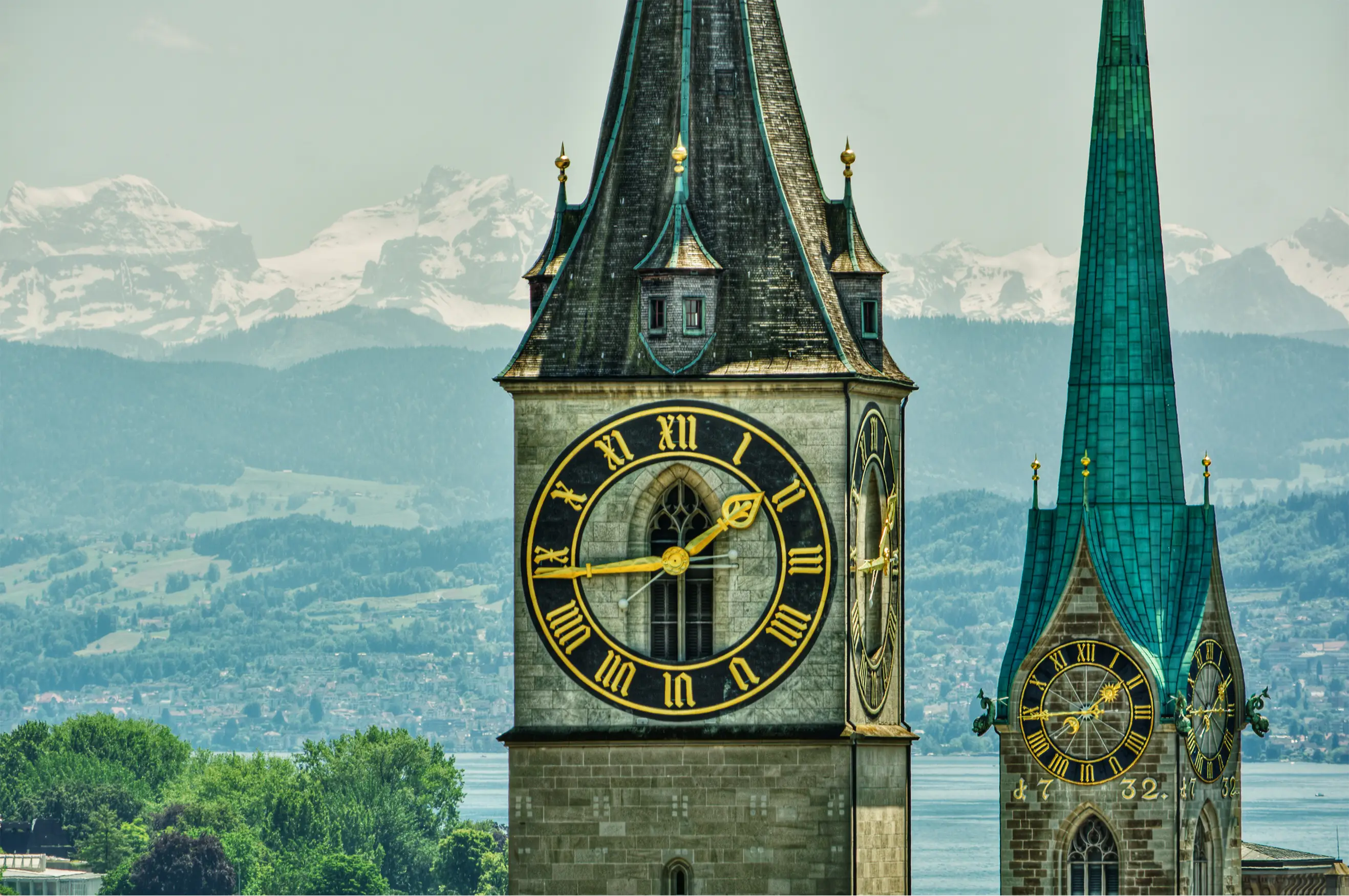
Zurich is Switzerland’s biggest city, located in the center of the country’s German-speaking region. It’s this location, superbly connected to almost everywhere else by train and close to an international airport, that makes Zurich an obvious destination for tourists. Well, that’s one of the reasons. There’s also the city’s bevy of bars and restaurants, the lakeside views, and stunning architecture around every corner.Take a stroll down the Bahnhofstrasse, a street known around the world for its unrivaled shopping. Weave through crowds of shoppers as you pass rows of world-famous and exclusive brands. Zurich is a small city, but that just makes it easier to get around. Lindenhof Hill, a slight rise of land in the center, offers views across all of the town. Among the city’s most striking features are the Grossmünster towers, which can also be climbed. This is a proud, sophisticated, and elegant city.
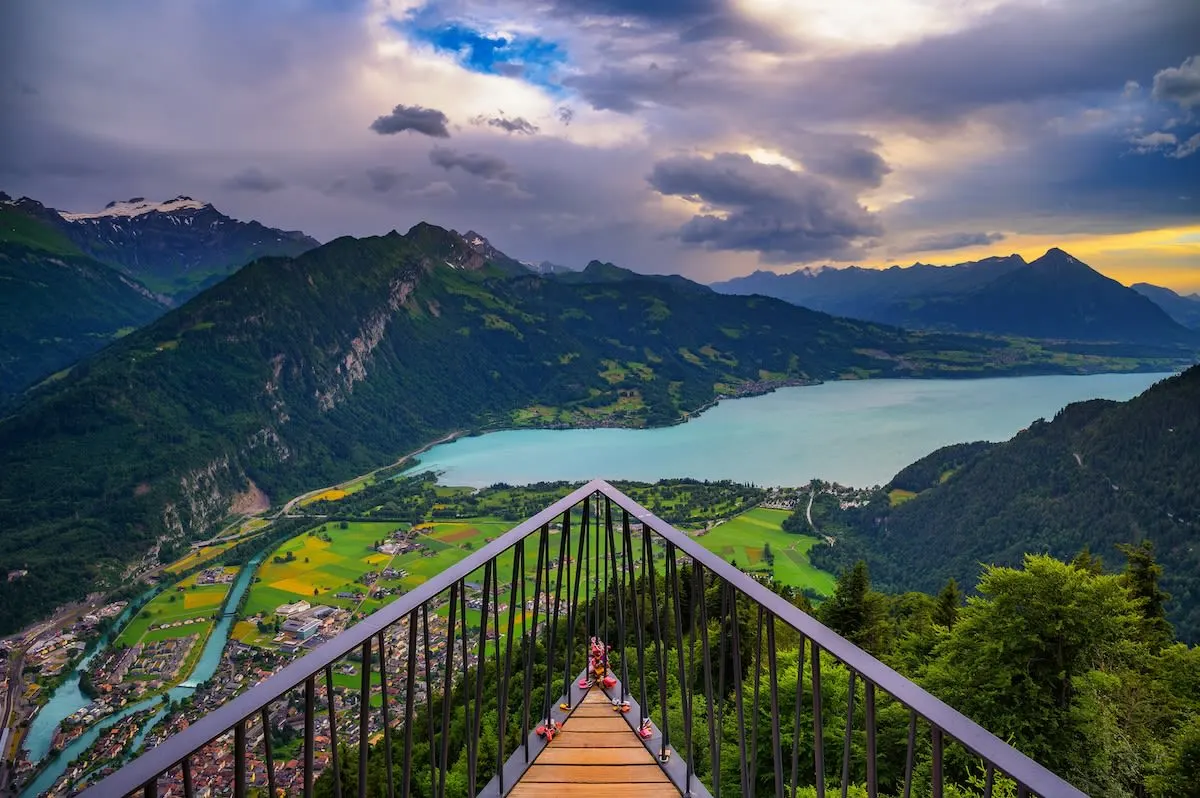
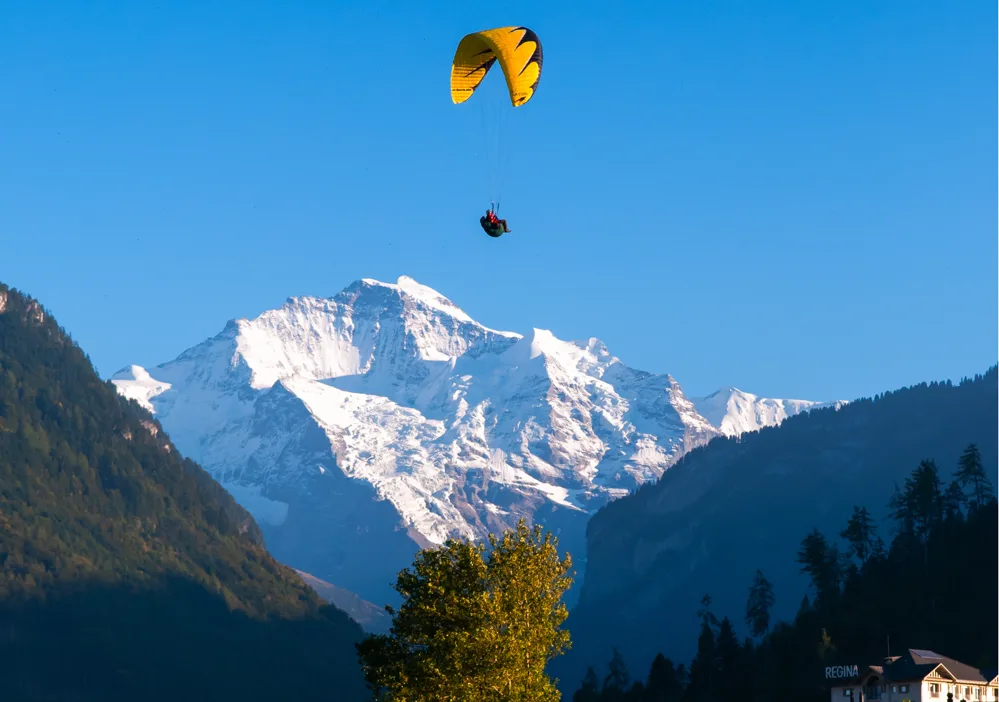
Located between two bodies of water — Lake Brienz and Lake Thun — Interlaken is the perfect place to explore the serene natural beauty at Switzerland’s heart. Interlaken is a place for those who seek adventure amid spectacular natural surrounds. Rock climbing, canyoning, bungee jumping, and paragliding are just some of the ways to fill a day here, and countless backpackers descend on the town every summer to do all of these and more.
Less intense, but no less rewarding, are the many opportunities for hiking, sailing, and swimming. Or, take to the rails. At the nearby Kleine Scheidegg pass, a train runs through the snowy Swiss Alps to the highest train station on the continent.
The fun here doesn’t stop at night. After a hard day of adventure, backpackers flock to the town’s many pubs and bars to soothe their aches and pains with steins of beer. Interlaken is a place where fun and excitement reign supreme and somewhere to experience Switzerland’s striking nature in the most thrilling way.
Arriving in Munich, you would be forgiven for thinking you were on the set of a movie about old Bavaria. At the Old Town beer halls, barmaids laced in dirndl dresses serve up frosty Helles lager, as oom-pah music drifts across the Marienplatz square. Men in lederhosen and checked shirts merrily give toasts as they knock glasses, or steins, as they’re known here. They sit at tables laden with wurst sausage and giant pretzels oozing with herby butter. This is Germany’s Germany, a place where folk traditions never stopped, and the revelry doesn’t either.
Even when it isn’t Oktoberfest, the town’s notorious beer-drinking celebration, Munich is always happy to show you a good time. Simply cast your eyes around the lavish, gilded banquet hall at the Munich Residenz, the 13th-century Wittelsbach palace. You’ll see Munich has been impressing guests for centuries. Or, swing by the BMW Museum and check out the classic German cars. They even let you sit inside to test out the new models. At the city’s English Gardens, surfers ride waves on one of the park’s rivers. Munich is filled to the brim with this kind of pure-hearted German fun.
You've probably heard this before— the city of Salzburg is straight out of a fairytale. Nestled in the mountains, this romantic city's Baroque architecture with colorful domes and spires is especially striking against the ancient fortress and Austrian Alpine backdrop. If you're looking for an amazing view, climb up to Hohensalzburg Fortress, Central Europe's largest intact fortress, for a jaw-dropping panorama of the city backed by misty mountains.
Perhaps most famous for being the birthplace of the renowned composer Wolfgang Amadeus Mozart and the filming location for the classic The Sound of Music, this city has much to offer. Salzburg has become an important artistic and cultural center, featuring magnificent concert halls that uphold the city's tradition of classical music every day of the year, as well as acclaimed art exhibitions and museums. If you do it right, your visit to Salzburg will immerse you in the city's unforgettable atmosphere and keep you coming back for more.
Artistic and musical, historical and elegant, Vienna is the definition of class. The seat of the Habsburg monarchy for over six centuries, it's no wonder this city is still fit for royalty. Baroque buildings and imperial palaces dominate the cityscape, while locals stride gracefully through the streets, likely on their way to a classical music concert or art exhibition. Visitors from all over the world flock to Schonbrunn Palace, historical museums, and local eateries for authentic Viennese schnitzel.
Vienna is also home to world-class wining and dining. Famous dishes include Wiener schnitzel, Tafelspitz (prime boiled beef), and apfelstrudel (apple strudel), all of which pair well with a glass of fine Austrian wine. No matter how long you spend in Vienna, you'll leave with a new appreciation for the finer things in life.
Lucerne’s international name may be French, but this spellbinding little city is actually situated in the heart of Switzerland’s German area. Lucerne was one of the first cities to join the Swiss Confederation and is a microcosm of all the typical Swiss quirks and charm that draw visitors to the country from all over the world. The city’s old town is beautifully preserved and also extremely compact. This is a place that is perfect for walking and looking. You’ll soon start to get an in-depth feel for the Old Town after just a few hours. Stroll across the famous Kapellbrücke bridge or the smaller Spreuerbrücke, or wander to the Löwendenkmal, the wounded lion memorial carved from a rock face. Stunning nature surrounds Lucerne, and the landmark Mount Pilatus towers over the city. It’s possible to climb the mountain, where hikers (and cable-car riders) will be rewarded with breathtaking views of the town below and the Alps beyond. Back at ground level, Lake Lucerne calls out for boat trips, which stop at the many villages and parks around the shores.
Zurich is Switzerland’s biggest city, located in the center of the country’s German-speaking region. It’s this location, superbly connected to almost everywhere else by train and close to an international airport, that makes Zurich an obvious destination for tourists. Well, that’s one of the reasons. There’s also the city’s bevy of bars and restaurants, the lakeside views, and stunning architecture around every corner.Take a stroll down the Bahnhofstrasse, a street known around the world for its unrivaled shopping. Weave through crowds of shoppers as you pass rows of world-famous and exclusive brands. Zurich is a small city, but that just makes it easier to get around. Lindenhof Hill, a slight rise of land in the center, offers views across all of the town. Among the city’s most striking features are the Grossmünster towers, which can also be climbed. This is a proud, sophisticated, and elegant city.
Located between two bodies of water — Lake Brienz and Lake Thun — Interlaken is the perfect place to explore the serene natural beauty at Switzerland’s heart. Interlaken is a place for those who seek adventure amid spectacular natural surrounds. Rock climbing, canyoning, bungee jumping, and paragliding are just some of the ways to fill a day here, and countless backpackers descend on the town every summer to do all of these and more.
Less intense, but no less rewarding, are the many opportunities for hiking, sailing, and swimming. Or, take to the rails. At the nearby Kleine Scheidegg pass, a train runs through the snowy Swiss Alps to the highest train station on the continent.
The fun here doesn’t stop at night. After a hard day of adventure, backpackers flock to the town’s many pubs and bars to soothe their aches and pains with steins of beer. Interlaken is a place where fun and excitement reign supreme and somewhere to experience Switzerland’s striking nature in the most thrilling way.
Arriving in Munich, you would be forgiven for thinking you were on the set of a movie about old Bavaria. At the Old Town beer halls, barmaids laced in dirndl dresses serve up frosty Helles lager, as oom-pah music drifts across the Marienplatz square. Men in lederhosen and checked shirts merrily give toasts as they knock glasses, or steins, as they’re known here. They sit at tables laden with wurst sausage and giant pretzels oozing with herby butter. This is Germany’s Germany, a place where folk traditions never stopped, and the revelry doesn’t either.
Even when it isn’t Oktoberfest, the town’s notorious beer-drinking celebration, Munich is always happy to show you a good time. Simply cast your eyes around the lavish, gilded banquet hall at the Munich Residenz, the 13th-century Wittelsbach palace. You’ll see Munich has been impressing guests for centuries. Or, swing by the BMW Museum and check out the classic German cars. They even let you sit inside to test out the new models. At the city’s English Gardens, surfers ride waves on one of the park’s rivers. Munich is filled to the brim with this kind of pure-hearted German fun.









 Not included




 Highlight of West Bank, Self-Guided